


Theatre and city. City and performance. Performance and theatre. City and theatre.
Do not rush to define the city; there is too much in it, and it is very easy to be mistaken
Georges Perec
The city is an evil force. A strong man comes and becomes weak. The city takes away strength. Now you are gone too…
A. Balabanov
Bergamo is a northern Italian city in Lombardy, as if stepped out of the pages of Italo Calvino. Surrounded by clouds, mountains, and Venetian walls, it preserves the secrets of the Middle Ages. Preserves and reinterprets them: for example, there are three functioning monasteries in Bergamo that I know of, and the closed ones have been converted into cultural spaces. In the former Augustinian monastery there is now the campus of the humanities faculty of the University of Bergamo, and in the Carmelite one, Teatro Tascabile.
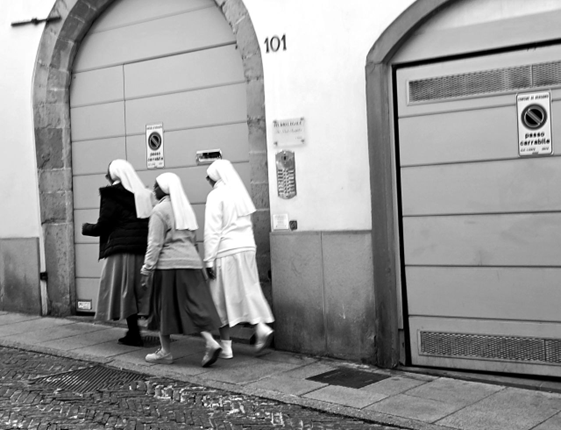
Teatro Tascabile is remarkable. On the borders of the former Venetian Republic and the Duchy of Milan, they stage Kutiyattam, performances of ancient Hindu Sanskrit theatre from Kerala. Miracles of globalization. And of restoration: in the newly laid wooden floor, smooth and comfortable for dancers, the frescoes of the fifteenth and sixteenth centuries are reflected.
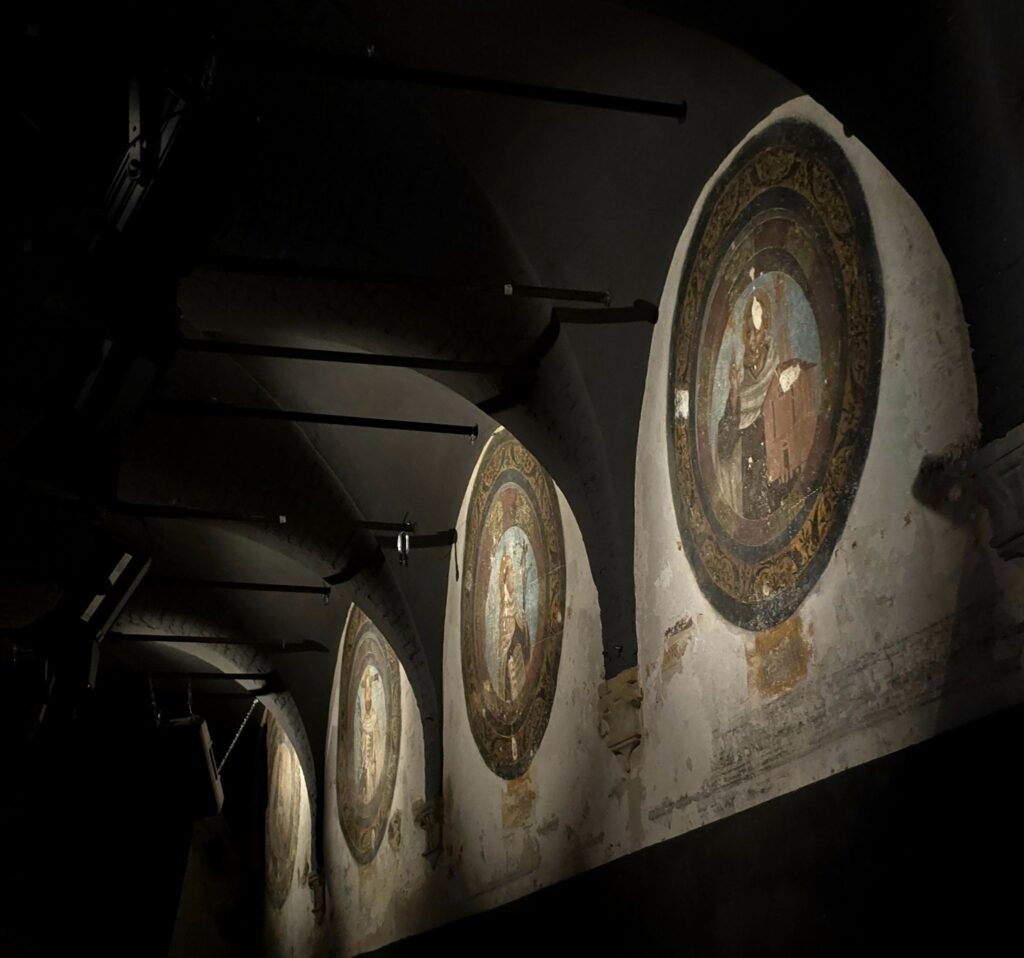
The idea of reuse and revitalization of buildings is not new and is widely spread: Moscow’s GES-2 and Winzavod, Sevkabel Port in Saint Petersburg. But theatre itself is a point of intersection of many unreal spaces. Theatre is a place where actor meets spectator, the unreal meets the real, the public meets the intimate, and the stage meets the city. Theatre is a heterotopia, and therefore any space is theatre. And vice versa.
***
Theatre is the city, and the city is theatre. This is how it was stated in the program of the conference I came to Bergamo for. After successful performative experiments with museum spaces in Weimar, our already quite theatrical troupe came to explore the northern Italian lands and their customs.
We were received on a grand scale: La Scala in Milan and Teatro Donizetti in Bergamo. The recently opened, but already noticed in Europe, exhibition “TAROCCHI. Le origini, le carte, la fortuna,” where one can find the oldest Tarot deck, the Visconti-Sforza Tarot. Lectures on theatre: from the ancient treatises of Vitruvius to the spectacular mechanisms of medieval liturgical drama by Filippo Brunelleschi and the intense Brazilian performances of Teatro da Vertigem.
Such hospitality required a response. Fortunately, a fellow writer from the Oulipo group, l’Ouvroir de Littérature Potentielle, Georges Perec, wrote in 1974 the essay “Species of Spaces,” a bible for any public art performer. The cards were in our hands.
***
The most important thing for me in Perec’s essay is that one should not try to grasp space as a whole. On the contrary, one should attempt to deconstruct it in as much detail as possible.
First, how do you understand that you are in Bergamo if you have fallen from the sky without a map and do not know the local language? Notice the province code BG on cars or follow the signs. And how do you understand whether you are in the old city, Città Alta, or the new one, Città Bassa? Determine it by the presence of cobblestone streets, by altitude, the old city is higher, and by the Venetian walls surrounding you.
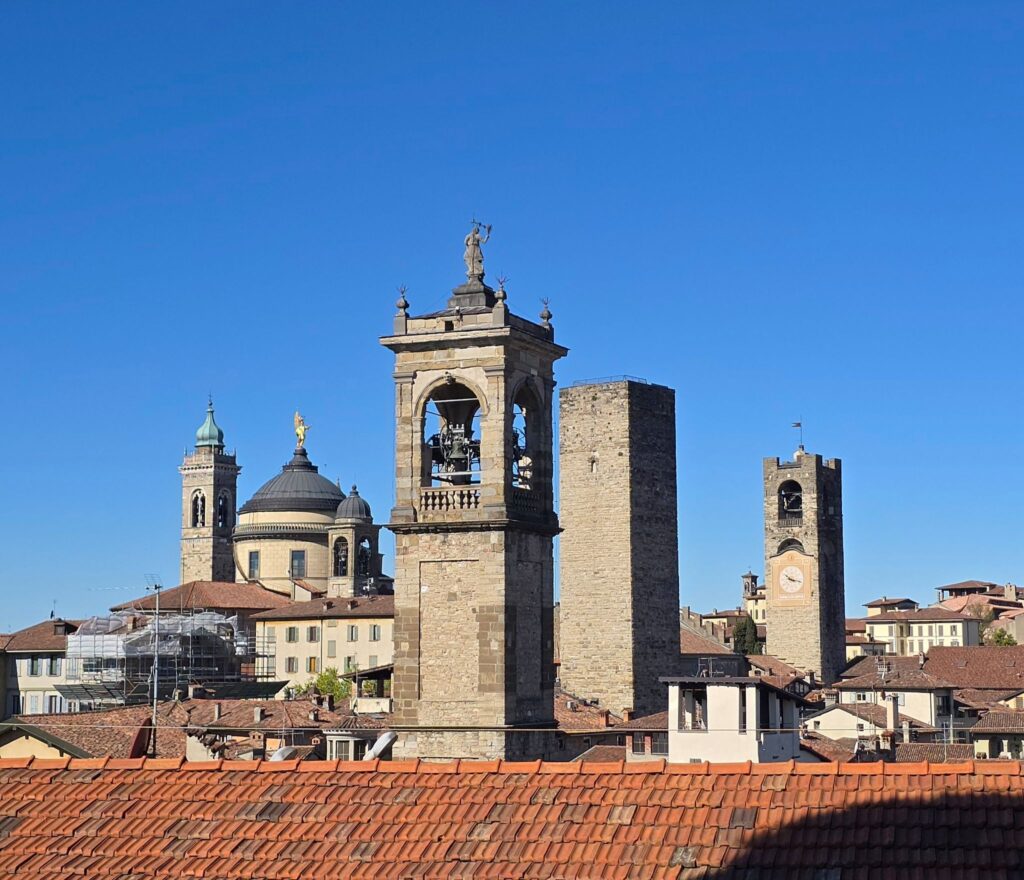
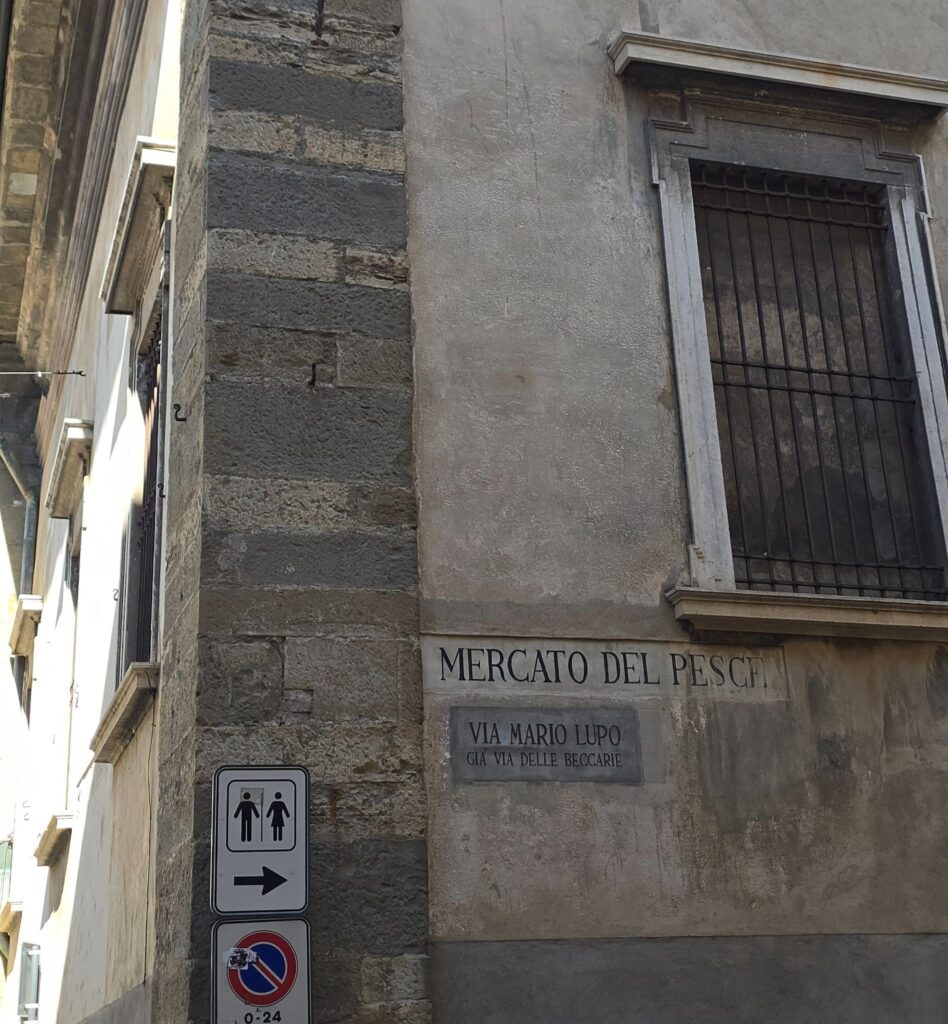
Second, remember that the city used to be different. The whole city was once built up with towers of noble families, but over time they were demolished more and more often. Where there is now a fountain, there used to be a laundry. On a wall one can see a half-erased inscription, “Mercato del pesce,” next to the main cathedral there once was a fish market.
Third, feel where the wind comes from. From the north, from the Bergamo Alps, or from the south?
Look closely at the streets. How are they named, how are they numbered?
Determine where your home is, eight people and one bathroom. Enjoy the pedestrian zones in Città Alta, almost get hit by a car in Città Bassa. Stumble over the cobblestones. Walk along the Venetian walls. Sit on them. Pass through each of the four gates of Città Alta: Porta S. Agostino, Porta S. Giacomo, Porta S. Alessandro, and Porta San Lorenzo.
Walk through the city with your eyes closed, catch the familiar smell of cheap cappuccino, sit in the sun near the Church of Alexander of the Cross. It is right behind a cigarette machine. Sit in a café. Sit for a long time. Mark the place, the day, the time. Look at people. Who is that sweet old woman in a green beret? A small loud dog. Where are the cars parked? Where do locals shop? Count the pigeons on the roof. Assess the men. How are the streets laid out? Why did you choose this route and not another?
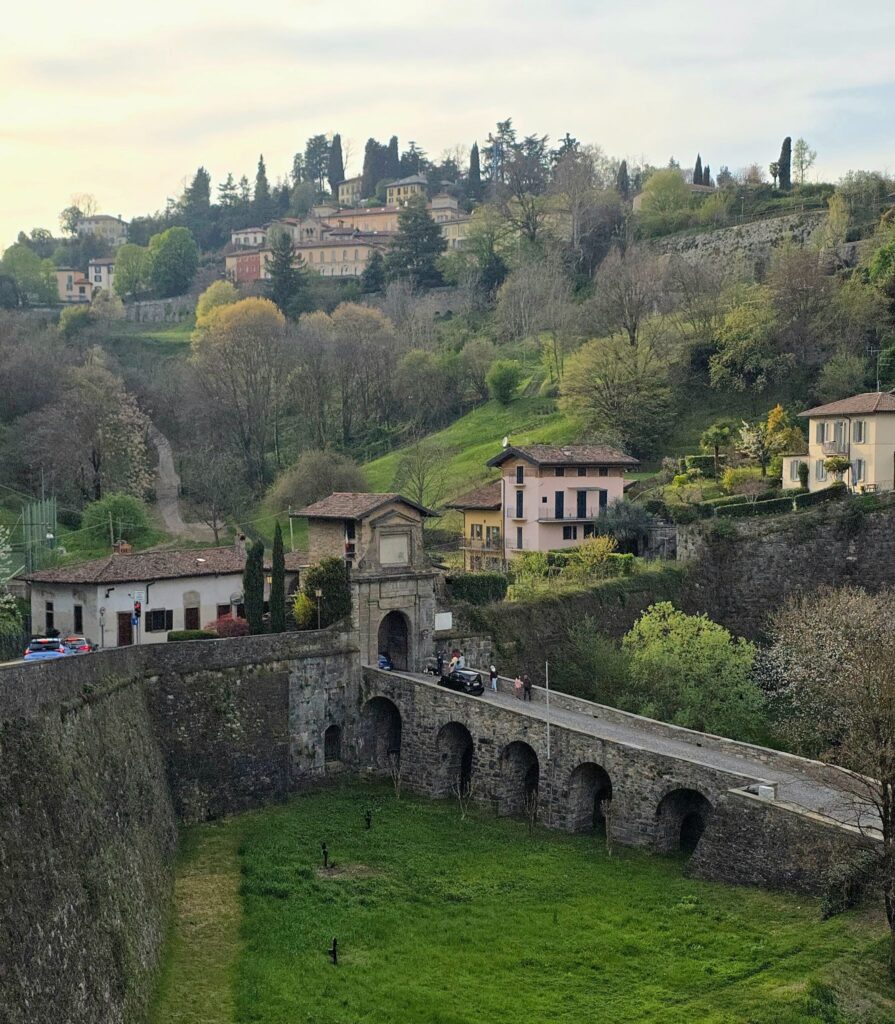
Get lost. Forget that you are in Bergamo.
***
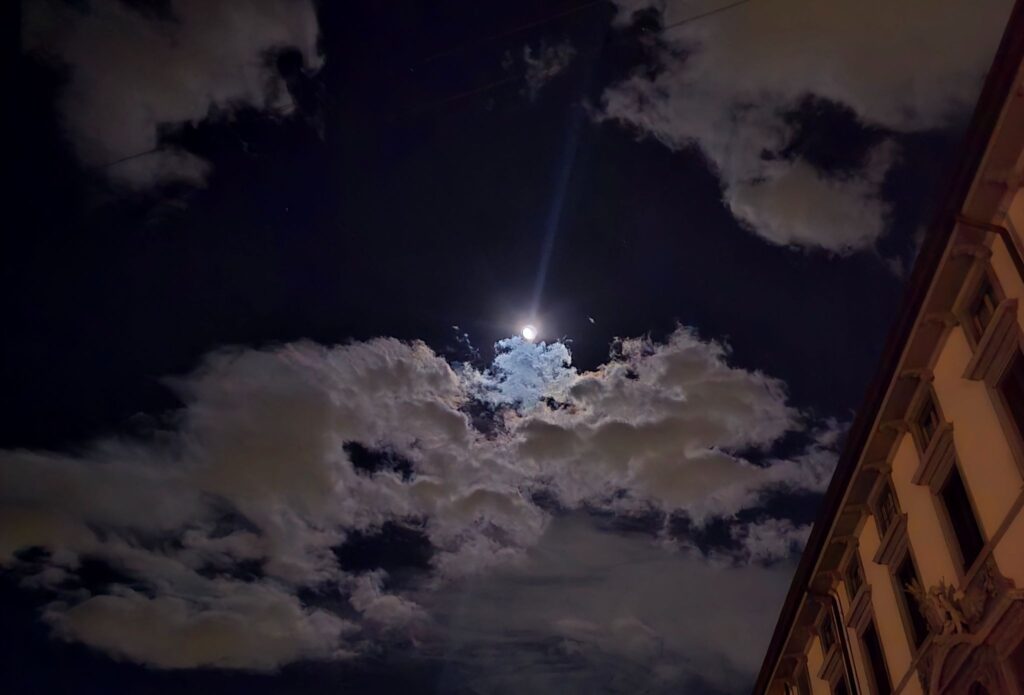
In the upper city, Città Alta, there is a square that Le Corbusier called one of the most beautiful in Europe: Piazza Vecchia. Sitting there on the steps of a café and almost choking on buttery casoncelli, I see the festival theatricality of Bergamo. My classmates from Lyon, Amiens, and Weimar spread across the square, trying to occupy its ledges, bulges, and niches with their bodies.
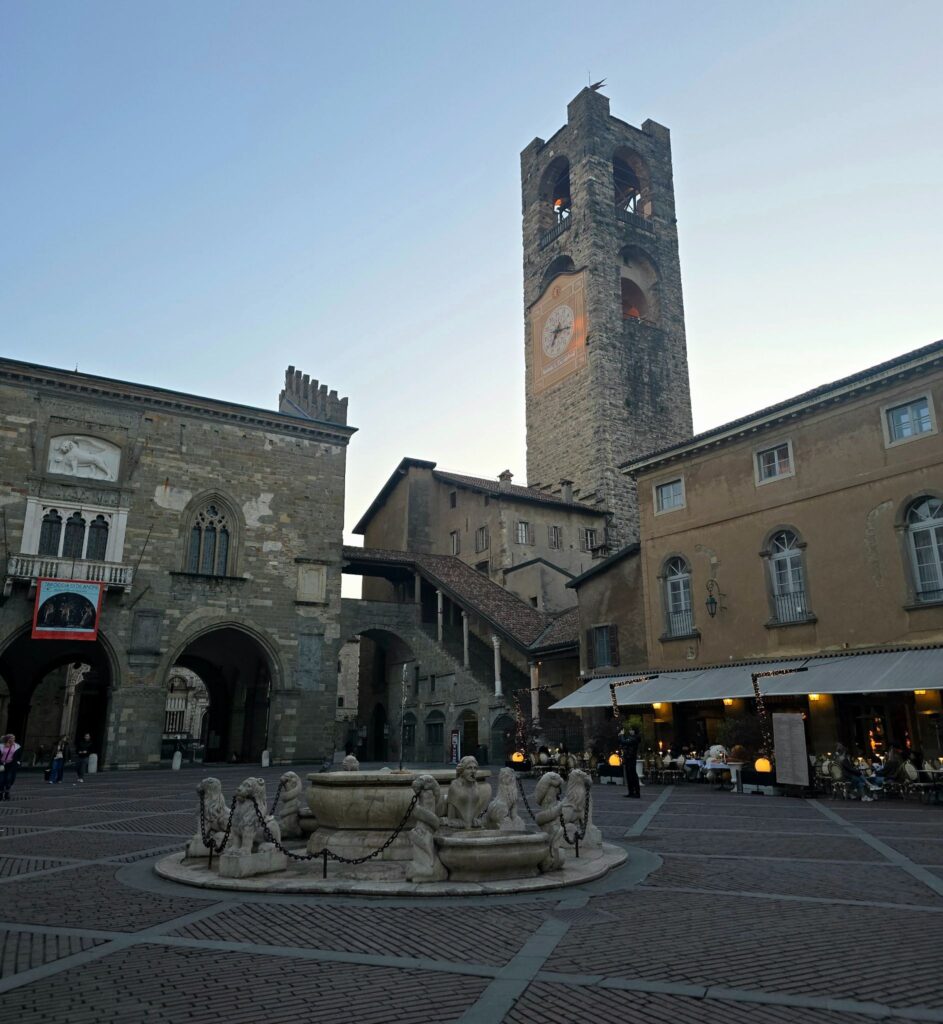
Piazza Vecchia, Daria De-Lauri, April 2026
Bergamo is a postmodern city. Teatro Tascabile is its almost undistorted mirror. A heterotopia in Foucault’s sense. The restored frescoes give off the cold of medieval stone in Città Alta, but the wooden floor creaks under the feet of tourists who have bruised their knees in Dante’s bolgia in Città Bassa.
Bergamo is a city. Just a city. As soon as, following Perec, I understand it as a transformer, I begin to relate differently to its spaces. Fountains appear as staircases, and staircases as beds. Every step becomes conscious, and I am like a magician, like the Venetian merchant Marco Polo from Calvino’s Invisible Cities, shuffling the cards of spaces, constructing a new Bergamo. My own.