

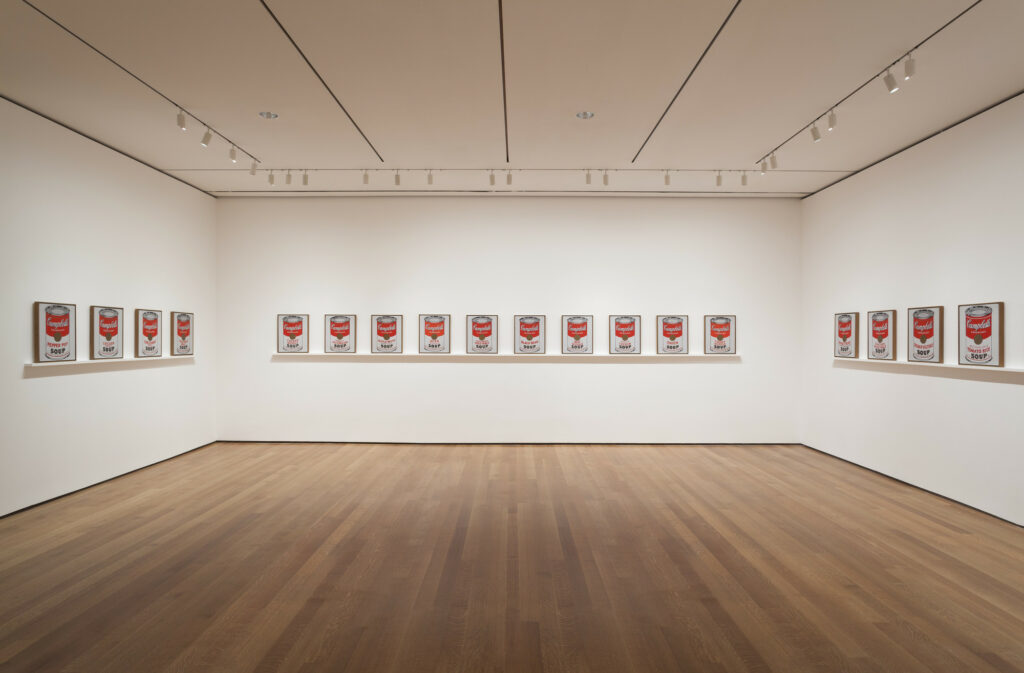
Almost everyone can probably picture what a Campbell’s soup can looks like, largely thanks to Andy Warhol. Some of these people most likely know that the “Soup Cans” amount to as many as thirty-two works; some may even be aware that the labels on each of them are different. And despite this, in our collective consciousness there is still only one can, even though in canonical exhibition formats it should be accompanied, if not by thirty-one variations, then at least by several.
This paradox is a clear example of how a single image can turn out to be stronger than the entire artistic statement as a whole: Warhol’s later reproduction of Campbell’s soup in other series only confirms this. But beyond that, there is also an expression here, just not in the form we are used to, one that goes far beyond Warhol alone or pop art.
Source: MoMA
When the notorious “Cans” were first shown to the public in 1962 at the Ferus Gallery in Los Angeles, a special display solution was devised for them, one that fits perfectly into what has since become the conventional understanding of pop art: the canvases were arranged along the perimeter of the walls and on a narrow shelf, “like in a supermarket.” And although one can argue about how much we like this interpretation and how its repeated reproduction aligns with that originally critical anti-institutional idea, one fact remains unchanged: their quantity, repetition, and totality as such are, if not the only, then certainly the central expressive element of the entire statement.
Their organization in space is not decorative, the visual rhythm is only a pleasant bonus, and the irony toward consumer culture persists only as long as the referential image remains present. If one were to formulate the same idea differently, the “Cans” are almost a textbook example of the claim that the whole is greater than the simple sum of its parts, thank you, Aristotle. This same principle connects Warhol to a much broader and more heterogeneous tradition of multiplicity in all its manifestations, which can be found both before and after 1962.
Source: Artnet
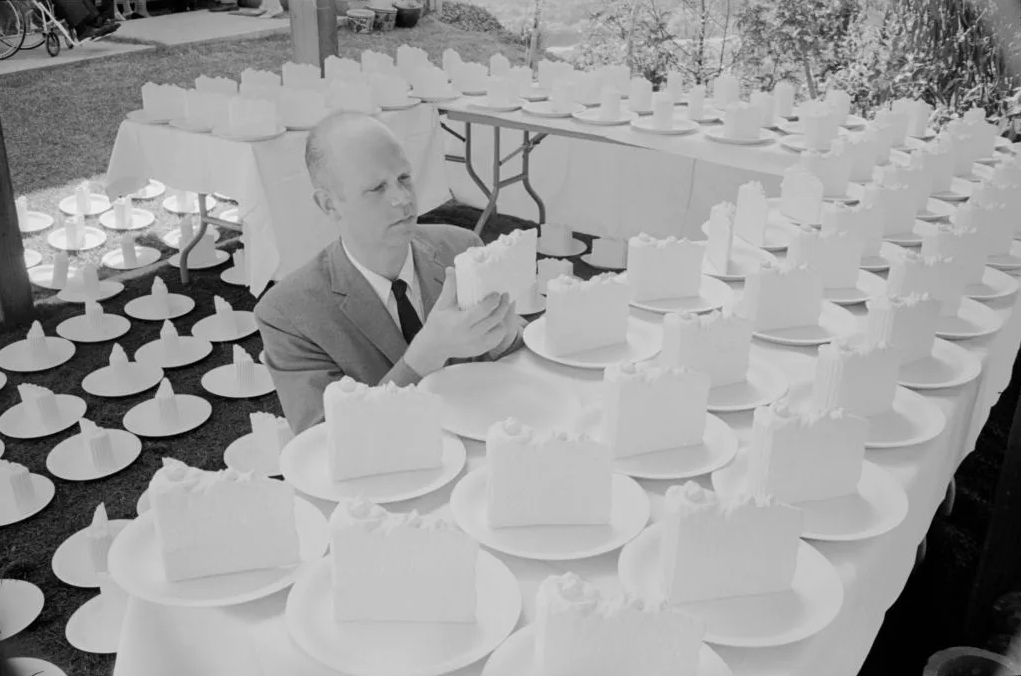
Unfortunately, before moving on to a historical overview, it is necessary to mark a fundamental terminological boundary. The terminology is already not the simplest, and in the absence of full-fledged Russian equivalents there may be a temptation to call any work in which there are more than two similar elements a series. To be fair, the chance of being wrong is not that high.
Alongside ordinary open series, series, within which an artist may produce any number of works, both identical and to some extent different but intuitively equivalent to one another, there is also the edition, or multiple, which is also considered a series, but a closed one, with a limited number of copies, this time identical ones. In addition, the field of art has blessed us with such things as artist’s copies and variations of works, but for the sake of our own peace of mind we will leave them aside for now.
The most important conclusion that can be drawn from all this diversity of serialities is that they are not equivalent to multiplicity. They describe only the structural principle of works: seriality is a framework, and multiplicity is a tool. This distinction may seem scholastic, but it is fundamental. It is precisely because of it that not every serial work will be multiple, although its exhibition formats probably will be, and not every multiple work will be serial. And if the previous sentence seems like stating the obvious, do not lose hope, it will become clearer further on.
Source: sofievandevelde
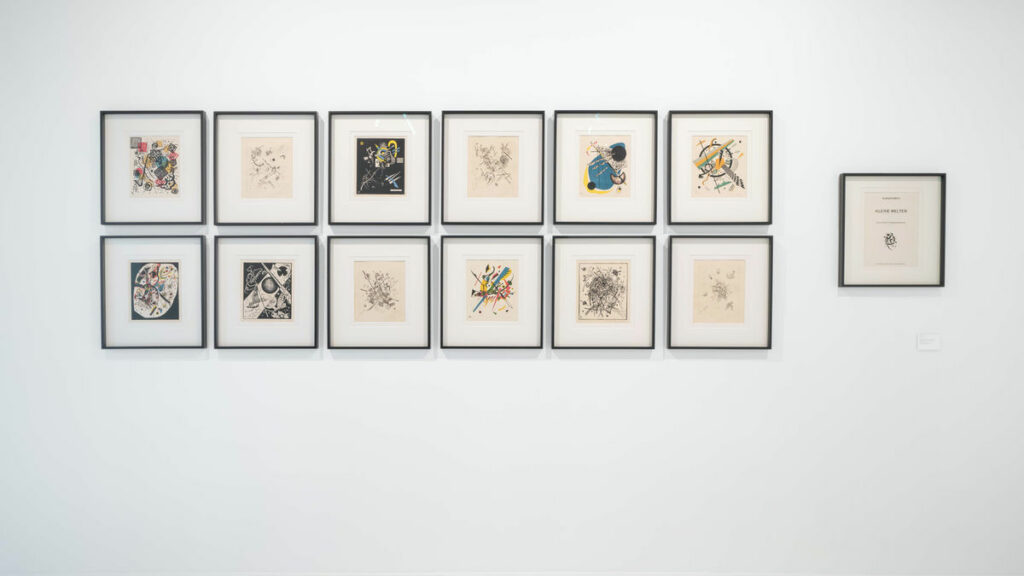
Editions and series are by no means an invention of postwar art, although it may sometimes seem so. Artists of the early twentieth century are more often associated with formal experimentation, which at that moment was still attempting to break with academic tradition while using the same painterly tools. Most of them, but not Marcel Duchamp, to whom, perhaps alongside Warhol, we owe an even greater radicalization of artists to the left. For the sake of completeness, one should also mention all the other Dadaists, and separately the Constructivist authors, from whom, it would seem, artists of the 1960s borrowed a “production” mindset, and then move on.
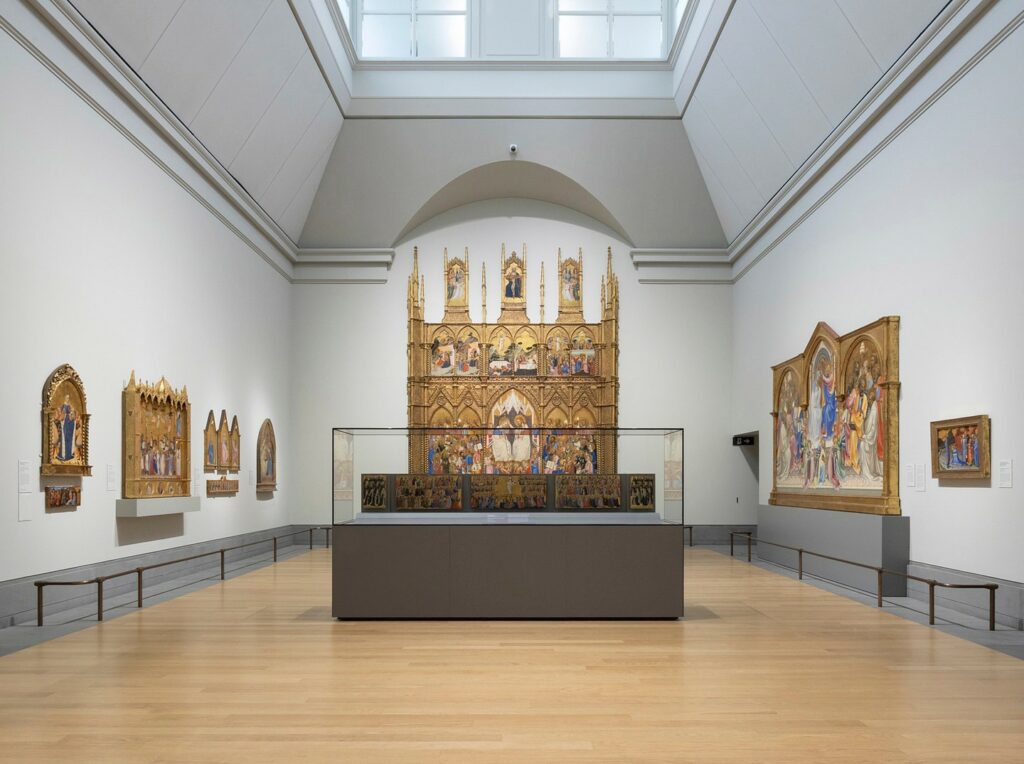
Move on, but not forward, because examples of the expressive principle of multiplicity can be found even earlier. Altarpiece polyptychs, which, along with all religious art, including sculptural groups of Gothic cathedrals, stand almost at the origins of everything we deal with today, are a clear demonstration of how multiple repetition of roughly similar elements serves to amplify the meaning invested in them. With Dutch group portraiture, the internal content is somewhat more complex, but it is difficult to recall any distinctive figures that stand out from the mass.
Source: Goppion
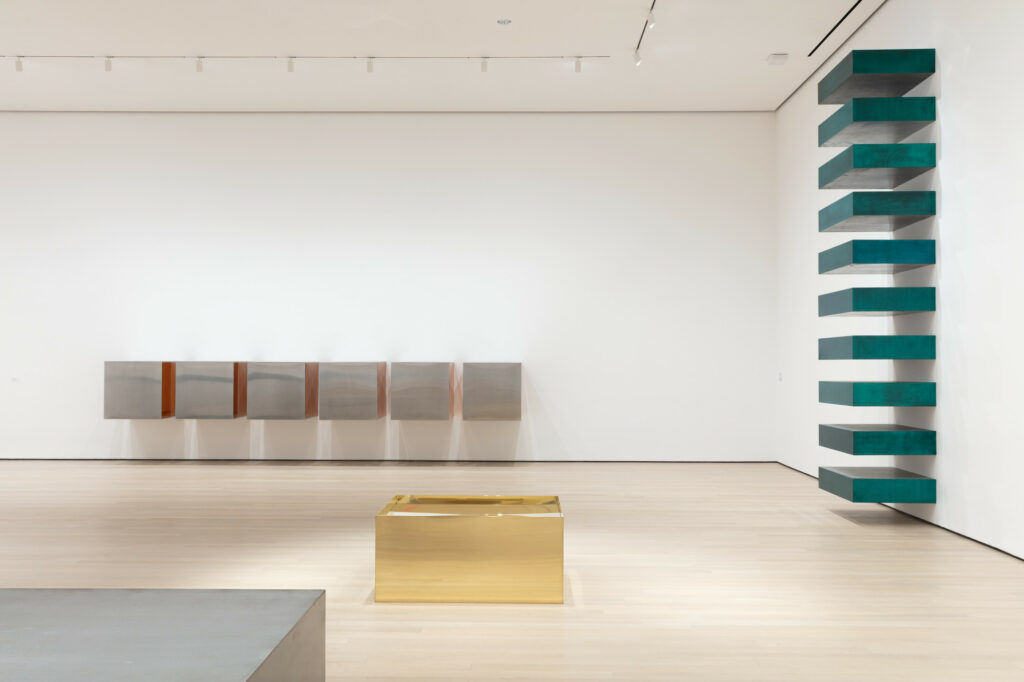
But let us return to the 1960s. A logical development after Warhol’s editions becomes minimalist open series, which are usually interpreted primarily in terms of space and material, and secondarily from the perspective of their anti-institutional positioning, which typically includes, in addition to unlimited editions, a widespread refusal to title works. Exhibition formats in which a large number of copies or elements appears only in the gallery space, rather than existing from the outset, as in Donald Judd’s “Stacks,” are not usually included in the standard interpretive set.
Although even works like “Stacks” are still exhibited not individually but as a whole set of variations. Why? Because through multiple repetition the critical component of open series is communicated to the viewer more clearly and directly, through which authors devalue the single unique art object. These exhibition strategies literally state: these are all originals of the same work, and you will now have to deal with it.
One copy of a concrete block may be minimalism, but it cannot illustrate or even suggest the existence of an unlimited number of identical ones if some of them are not displayed together. From this it follows that series is a principle, and multiplicity is a form. But it is too early to celebrate, because, as always, there is a nuance.
Source: MoMA
The nuance is that this principle applies to a significant portion of minimalism, and practices that inherit from it, but it cannot always be transferred to conceptual art in the same way. Here, one has to think. For works like the “Gas Tanks” by Bernd and Hilla Becher, multiplicity becomes both principle and form at once. In such works there is no standard model or arbitrary variations in the spirit of Warhol, who could easily have made thirty-one cans by removing one soup he particularly disliked from the list without risking the loss of meaning. Here, documentation is the main driver of form, and it is required to be exhaustive.
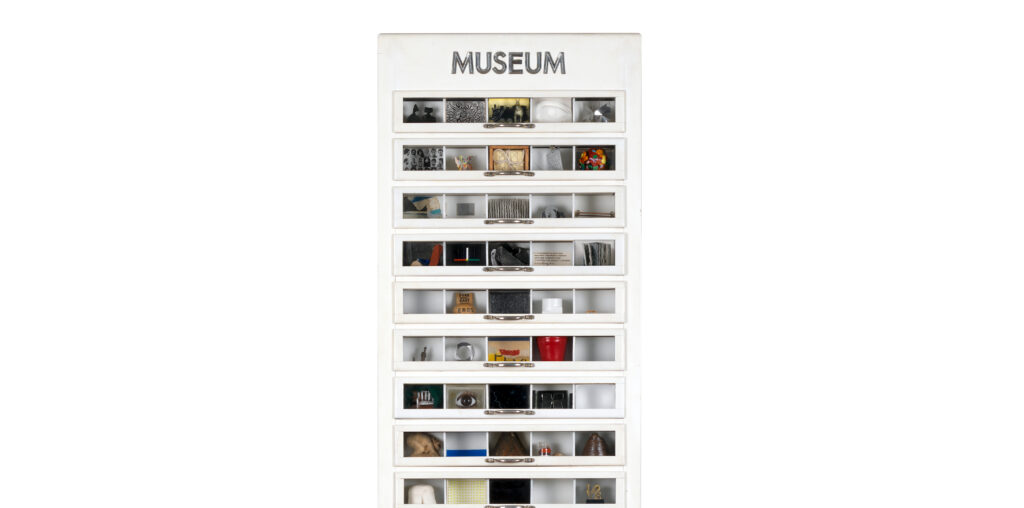
This is why exhibition formats present a multitude of works rather than just a few of the most presentable ones, and it is precisely through multiplicity that, despite internal variation, a shared semantic framework is formed. Although in casual conversation among art enthusiasts, the “Gas Tanks” will still be called a series, but only because “typology,” which is what this project essentially is, sounds as if you belong in a library rather than at an opening. Whereas something like Herbert Distel’s “Museum of Drawers,” where seriality is entirely absent, can no longer be called anything other than multiple. Here all expression is reduced to the presence of a large number of elements united only by a shared theme or concept, yet enclosed within a single unique object.
source — Schubladenmuseum
Perhaps the paradox of the “Cans,” from which the contemporary version of this story began, is not so paradoxical. Consciousness, one way or another, strives to extract something singular and unique from any multiplicity, whether it is a canonical minimalist form slightly blurred by countless copies, or a single image of a gas tank or a soup can with its endless variations and documentation. The idea of the unique artwork as the norm is so deeply embedded in us.
The entire tradition of multiplicity, from editions and open series to archives and sculptural groups in the portals of Notre-Dame or the Milan Cathedral, works precisely with this idea. Sometimes by using it, sometimes by resisting it, but always as a tool of expression without which none of these artistic statements would have even a tenth of their effect. And whether a work is a thing or a relation between things is something each of us, unfortunately, has to decide for ourselves.