


- Jacopo Crivelli Visconti is one of the most distinctive Italian curators of his generation, based in São Paulo. He has directed the 34th Bienal de São Paulo and curated the national pavilions of Italy and Cyprus at the Venice Biennale, known for blending precision and exploration of spatial poetics .
- For the second year in a row, Jacopo leads as one of the two curators of the “Back to the Future” section at Artissima.
- Artissima is Italy’s main contemporary art fair, distinguished by its strong curatorial vision and institutional focus.
- Julia Kirhgesner attended the fair and spoke with Jacopo Visconti about the vision behind this year’s “Back to the Future” section, the artists, the theory of drift, the theme of communication, and the economic framework.
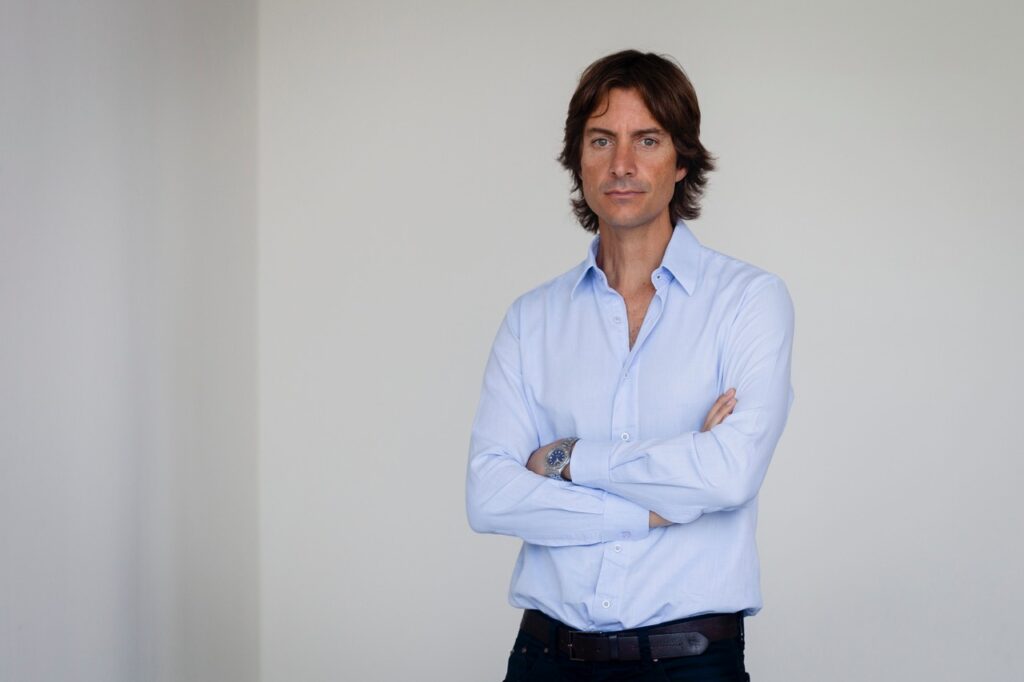
Photo: courtesy of Artissima
If “Operating Manual for Spaceship Earth” positions the planet as a vessel without instructions, would you say that “Back to the Future” gathers the first drafts of such instructions written by artists decades ago?
Well, let’s say that the theme of this year’s curatorial section Back to the Future revolves around the idea of communication — and all the different possibilities it opens. I wouldn’t necessarily describe it as a set of instructions on how to improve or look toward the future. For me, art has always been a tool to better understand the world and to imagine how it might evolve. Maybe not in the distant, utopian sense of a spaceship journey, but in a more pragmatic way — in how we might rethink and improve the societies we build.
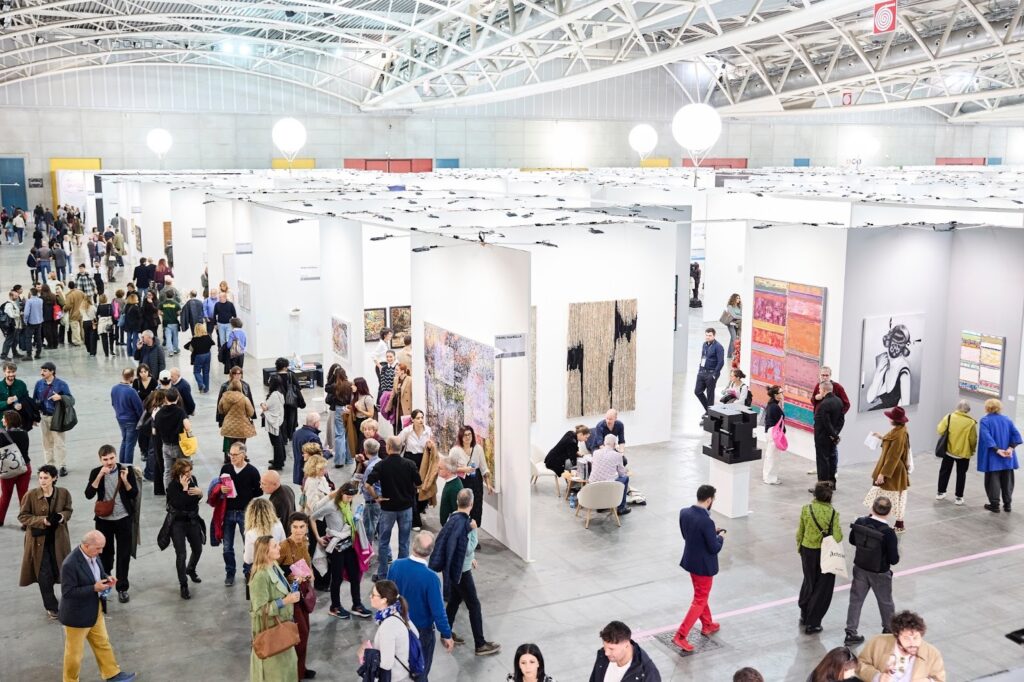
Photo: courtesy of Artissima
You describe communication not only as a method but as a subject of inquiry. In curating this section, how do you distinguish between communication that connects and communication that distorts?
I think the main difference among the artists we’re presenting doesn’t really lie between the artists themselves, but rather in the contexts in which they were working. Many of these acts of ‘communication,’ so to speak, were created at moments when the very idea of expressing oneself freely was far from obvious. The struggle for the right to communicate was already a statement in itself.
You can see this clearly in many of the Latin American positions we’re showing — most of those works were produced during periods of dictatorship in various countries across the region. But the idea also extends further back, for example, to when Francisca Themerson was working between the two World Wars and in the years that followed.
So for many of the artists we’re featuring, communication is not just an artistic concern; it’s something that directly touches on broader political, social, and economic realities.
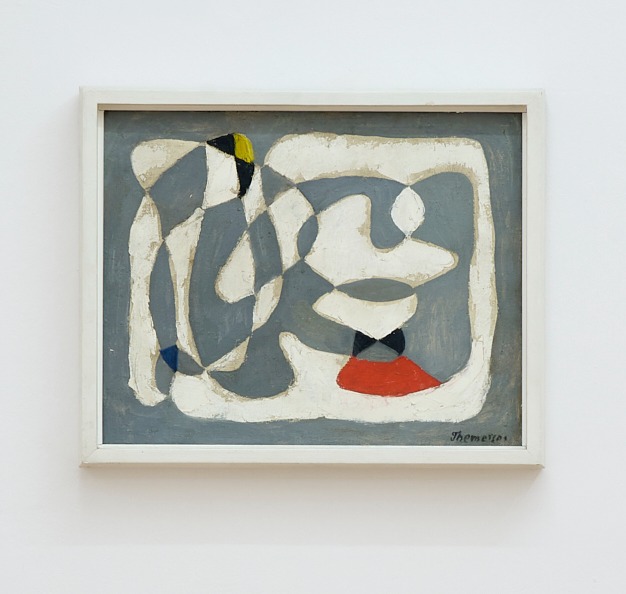
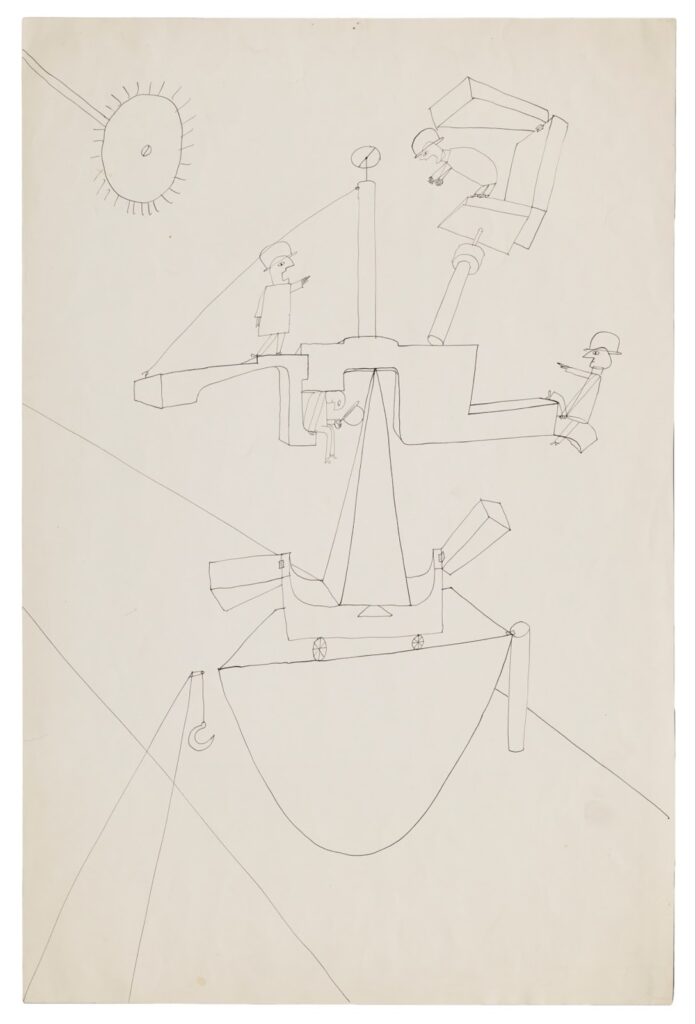
Artissima Art Fair, Torino, 2025
Photo: courtesy of Artissima
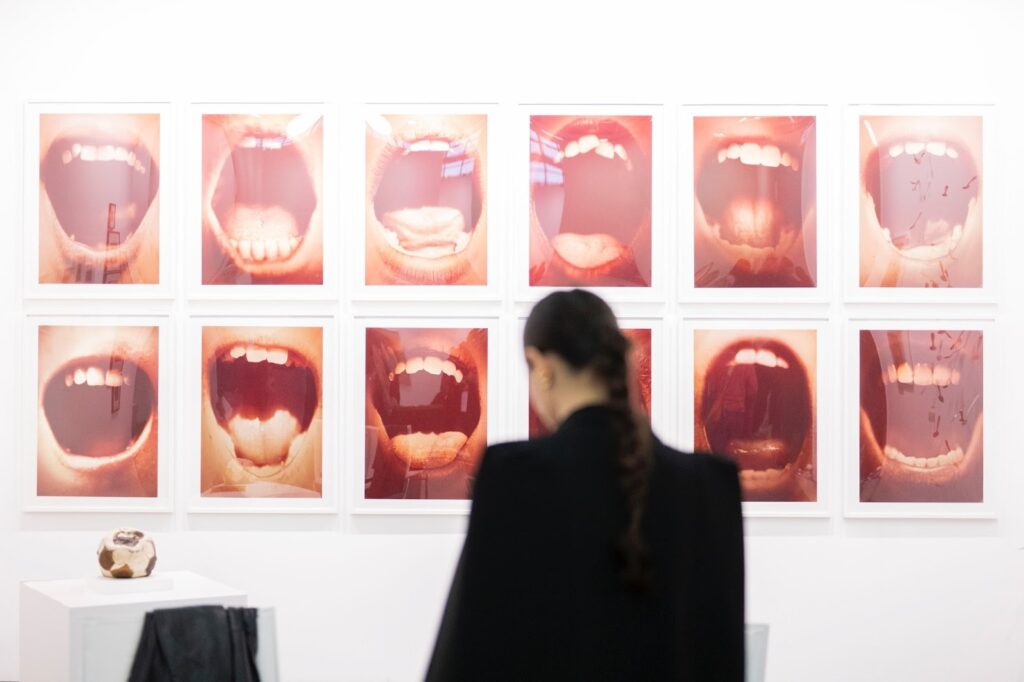
Photo: courtesy of Artissima
When you started working on “Back to the Future”, what was the initial impulse: did you begin with an idea and then look for artists and galleries to articulate it, or did the process start from the applications and availability of galleries already working with historical estates? In other words, how much of the section is concept-driven, and how much is shaped by the fair’s market framework?
Of course, it’s shaped by the market — it would be ridiculous to claim otherwise. That’s exactly what we’re part of here. But from both a logistical and chronological perspective, everything always starts with the idea.
This is the second year we’ve organized the section in this way, and the process has been quite similar each time. Roughly 80% of the participating galleries are those we invite directly, while the remaining 20% apply independently. But it always begins with the theme — the galleries apply knowing it, so it couldn’t possibly work the other way around, you know?
“That’s a naive question, because the economic structure never really disappears — it’s always there. Here, it’s simply more transparent, more visible.”
Jacopo, having curated several biennials, how different would your selection have been if “Back to the Future” were part of a biennial rather than a commercial fair? Would the same artists appear, or would the curatorial logic change once the economic structure disappears?
That’s a naive question, because the economic structure never really disappears — it’s always there. Here, it’s simply more transparent, more visible. In that sense, the market is more present at a fair. But you could also say that this is the place where things are spoken of as they truly are. Even at biennials — and the Venice Biennale is the clearest example — the market still plays a role. It always does.
So I wouldn’t say it’s as simple as that. Many of the artists shown here I’ve worked with before — not so many this year, but quite a few in last year’s edition. And while those previous projects weren’t commercial in nature, it would be naive, or even a bit hypocritical, to claim that when you curate a museum show or a biennial, you’re entirely outside the market. You never really are.
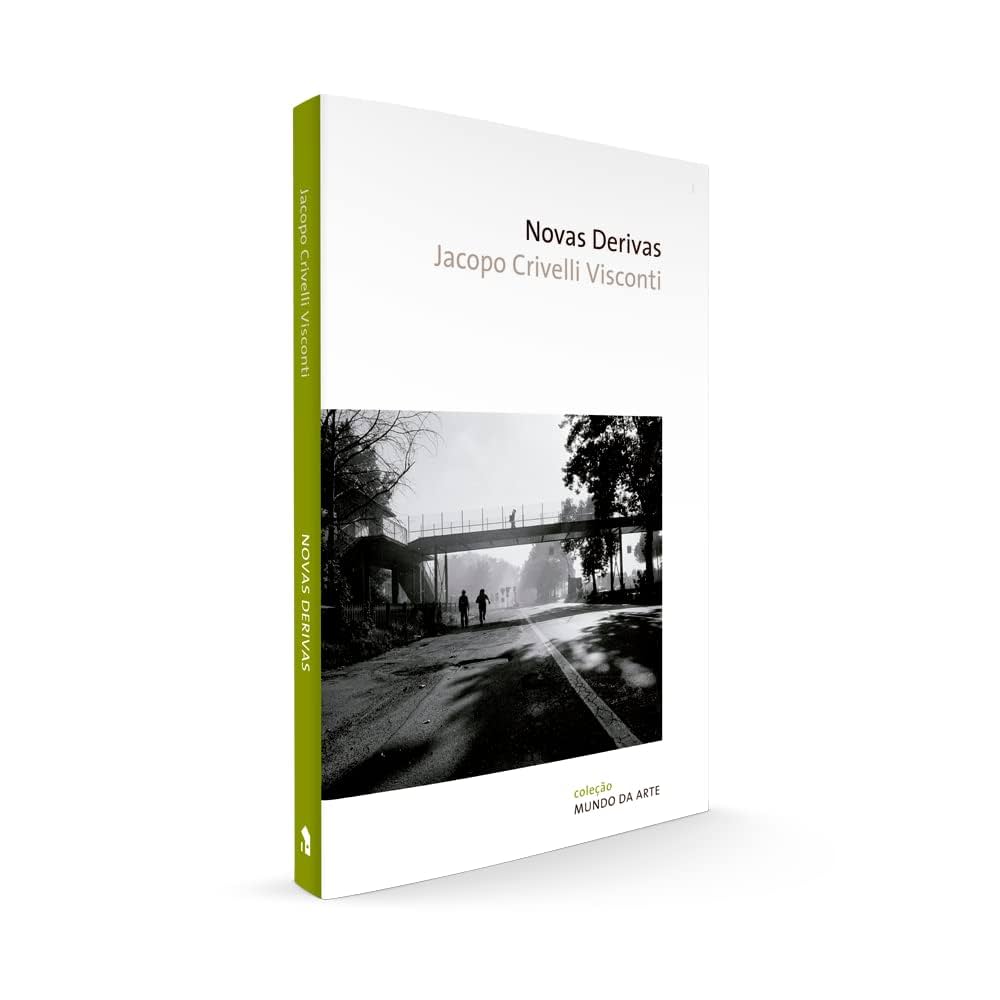
Jacopo, your book “Novas Derivas” speaks of drifts and deviations. How does the idea of “drifting” translate into a curatorial gesture inside this section?
The kind of artists I discuss in my book are, in a way, connected to what we’re talking about here. Most of them were quite explicit in addressing or criticizing the art market. The idea of the act of walking as an artwork already carries the notion that art doesn’t have to be something physical — something that can be bought or sold.
What I argue in the book is that, for many of these artists, proposing walking as an artistic gesture was also a way of suggesting that society itself should be structured differently. So yes, there’s definitely a connection between those artists and many of the artists in this section — though not all would directly fit into my research.
Still, there’s an overlap: several of the artists we’re showing have created works for public spaces. And when you think about public art, the idea of walking is always there. You don’t experience such works just once — you encounter them repeatedly, and their meaning builds up through the layering of those moments of seeing.
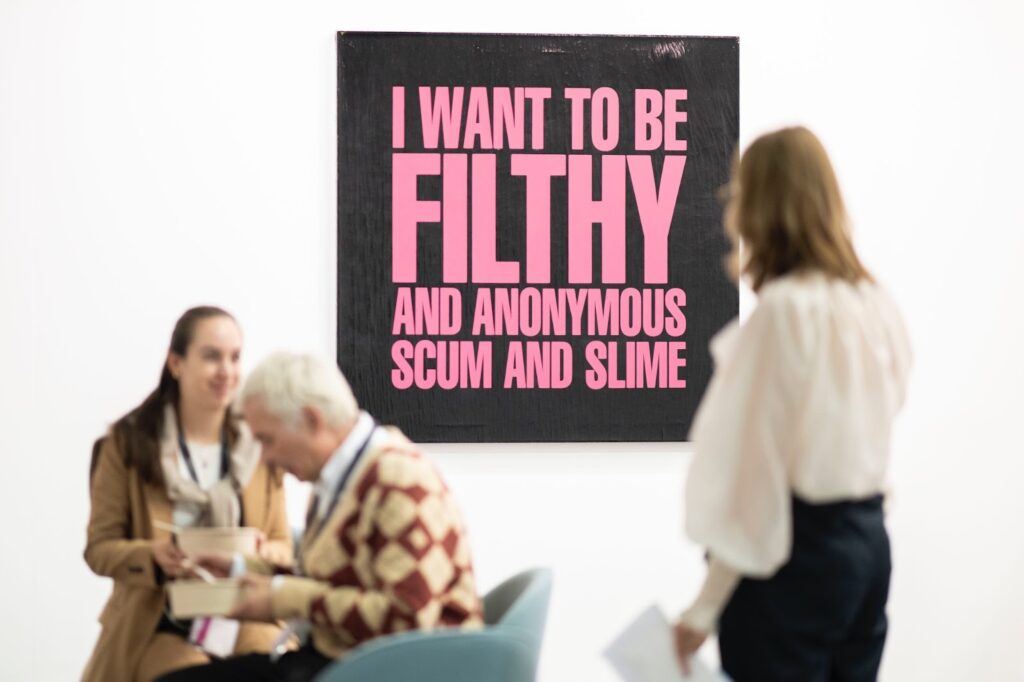
Photo: courtesy of Artissima
Is the artist as a designer of communication systems in your view closer to a poet or to an engineer – or perhaps to both?
In this year’s edition, we have poets like John Giorno. Then there are artists like Antoni Muntadas, who isn’t exactly an engineer, but approaches communication systems from the perspective of propaganda. In that sense, he functions almost like a scientist analyzing a system, rather than someone aiming to contribute to it poetically. So I think both approaches can work, especially for this specific group of artists.
Your collaboration with Heike Munder brings together very different geographies and curatorial lineages. How did you negotiate the balance between European archival thinking and the more fluid, process-based approaches rooted in Latin American contexts?
Yes, I think we come from different backgrounds, but we’ve both been interested in diverse forms of art. Neither of us, I’d say, is the type of curator or critic who focuses on a single medium, period, or style. We tend to be drawn to works that are very different from one another.
Another important connection is that we both have a strong affinity for art that carries a political message — intentionally, not by accident. I’ve spent a long time in Latin America, while Heike has conducted extensive research and curated several shows and publications on artists from both Latin America and the former Eastern Bloc who were deeply engaged in conceptual and political practices. That’s largely where our approaches intersect.
“We tend to be drawn to works that are very different from one another.”
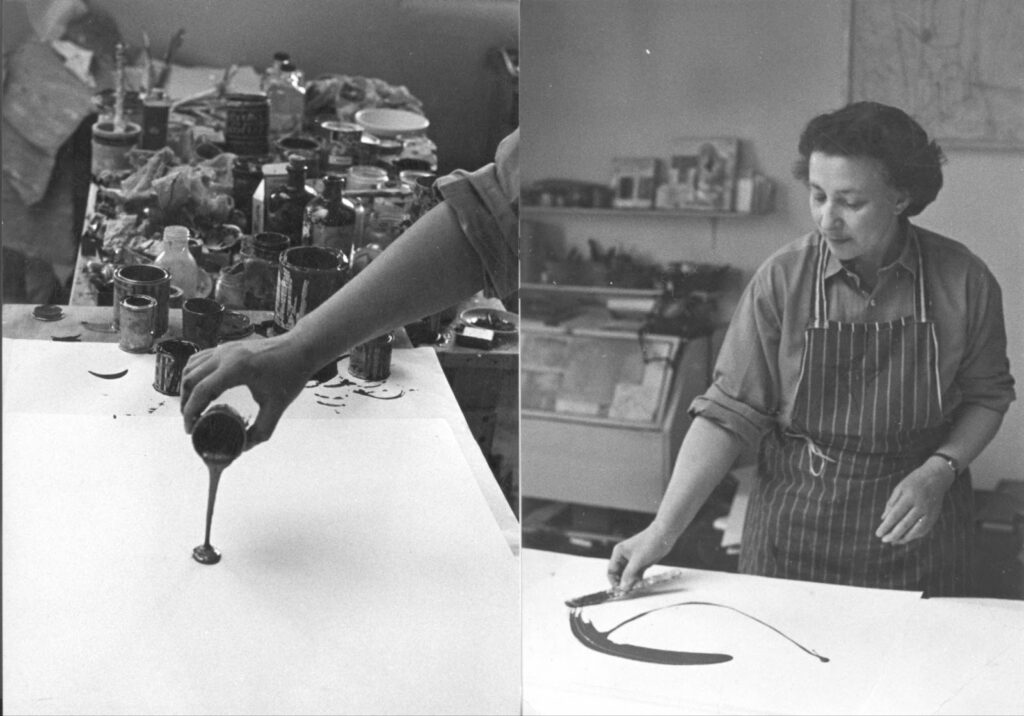
Photo: courtesy of Artissima
You stress the importance of reflecting on “the conditions and limitations of communication.” Why is it crucial today to speak about limits, rather than possibilities?
Well, I think today we face very clear limits on what one can say and what one cannot — unless, of course, you are in a position of power, like some politicians, where you feel free to speak without concern for how others will react. For most of us, though, even people who are very careful about what they should or shouldn’t say often experience a genuine fear of actually speaking.
From one perspective, this is positive: it shows that we care more about our words and recognize the tools we should use when communicating. On the other hand, it also limits freedom of speech. It’s not always direct censorship, but self-censorship that can prevent us from expressing certain ideas. In that sense, the question of communication is urgent — it forces us to consider what can be said, what cannot, and how these boundaries shape the way we speak.
Photo: courtesy of Artissima
What personal discoveries did you make while preparing for the fair?
Well, as I mentioned before, I’d say we were already familiar with roughly 80% of the artists in our section. But there were a few we hadn’t known personally. One discovery for me was Renato Spagnoli, represented by gallery Gian Marco Casini and gallery Laveronica. As an Italian myself, it was even more surprising to come across him — and I think he’s an amazing artist.
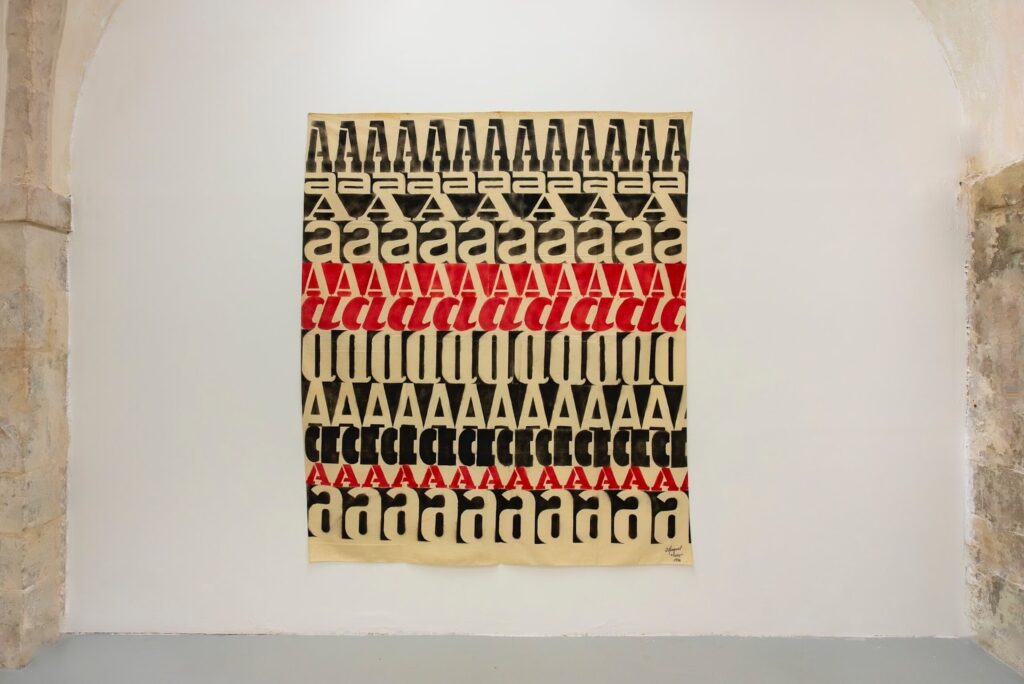
Photo: courtesy of Artissima
“the best part is always the research and the learning”
What aspect of the extensive work you did while preparing the section are you most proud of?
Yes, I don’t know if I’d call it something to be proud of, but the best part is always the research and the learning. I’ve been part of several juries, and I find that the most rewarding aspect isn’t really awarding the prize — it’s discovering artists, ideas, and galleries that you hadn’t known before. So maybe it’s not a matter of pride, but it’s definitely the most fulfilling part of the job, I think.
Interview questions prepared in collaboration with Liza Novikova.