

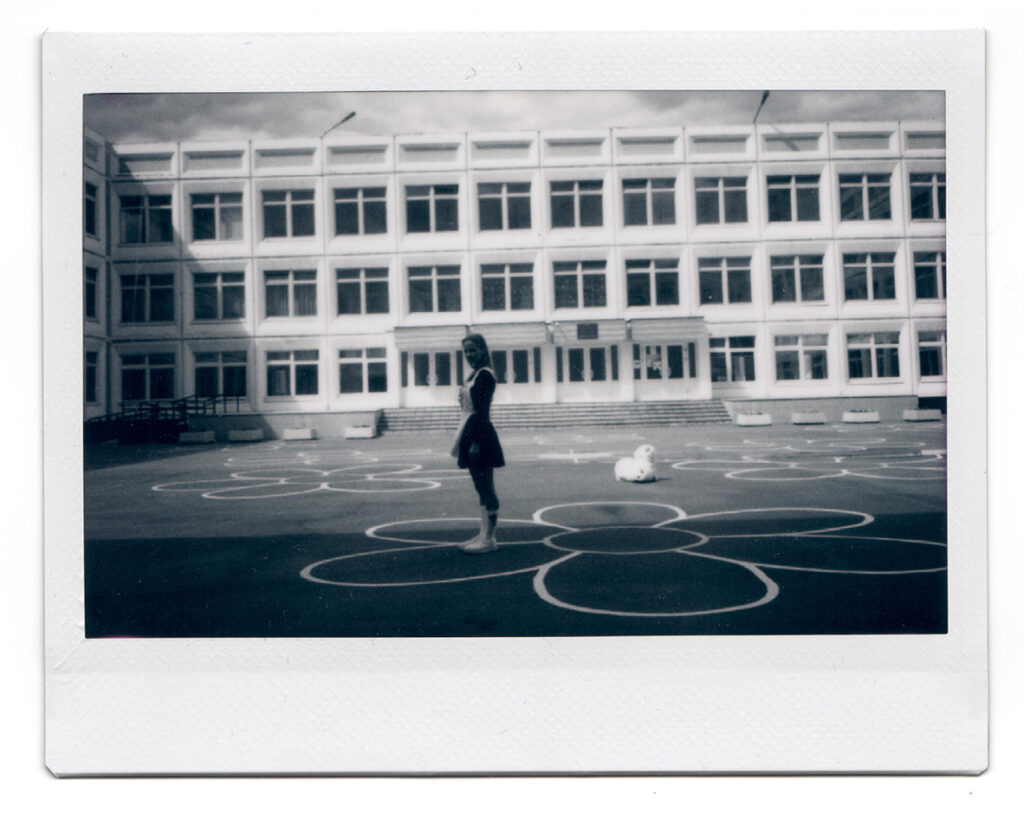
For many people who grew up in the (post)Soviet space, school never truly ends. It keeps coming back in dreams long after graduation. That dream is a ghost landscape, defined by the sharp squeak of desks, the paralyzing fear of being called to the blackboard, and the exhausting weight of memorizing poems that never felt like your own.
Marie Lourier
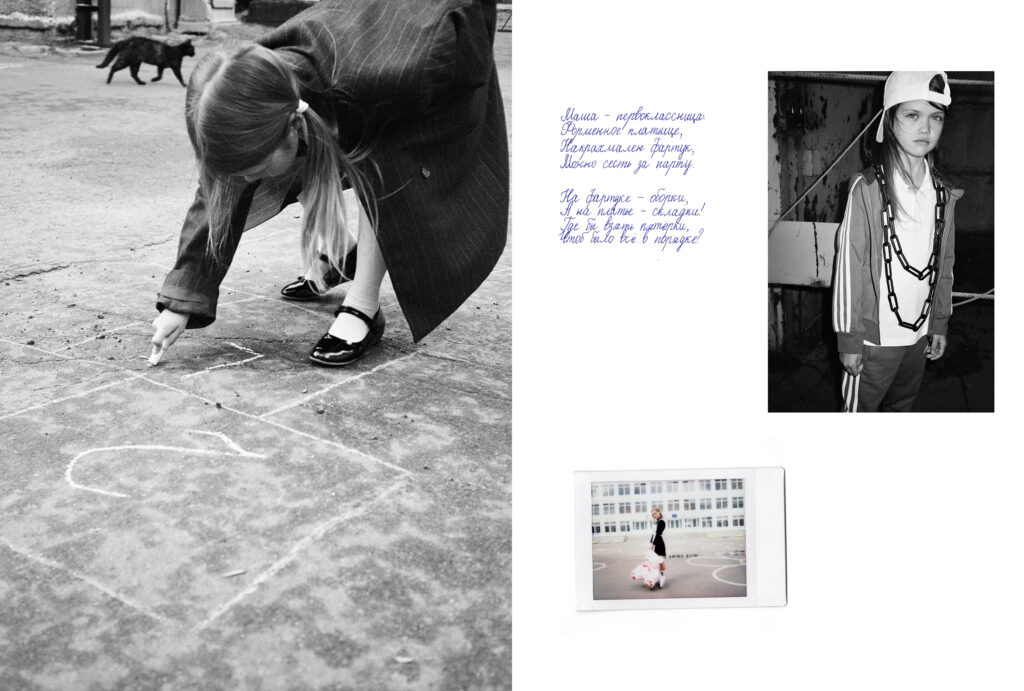
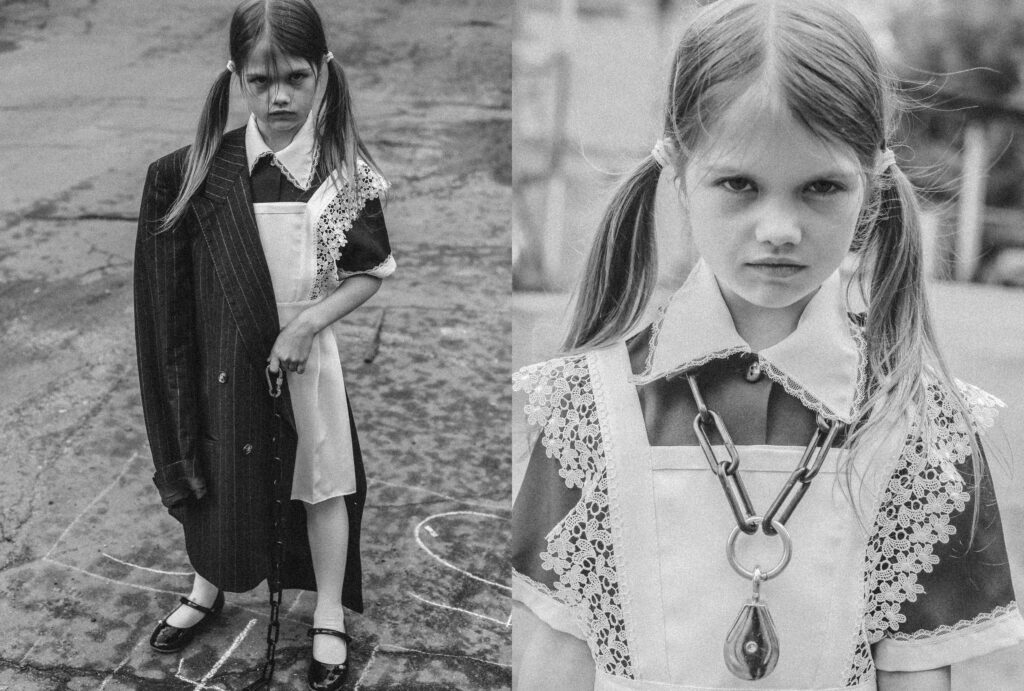
In the project Look Me in the Eyes, Marie Lourier, working with Gala Oifa, turns her camera on this educational system, a system where the personal is systematically crushed by authority. The title itself twists a common disciplinary command that teachers use to force compliance. Instead of creating connection, that command turns a simple human request into an act of surveillance and shame. By photographing a first-grade student and a high school senior, Lourier maps the symbolic journey from the beginning to the end of this oppressive period. But her subjects look straight back into the camera. These girls return the gaze. They reclaim an agency that the system tried to erase.
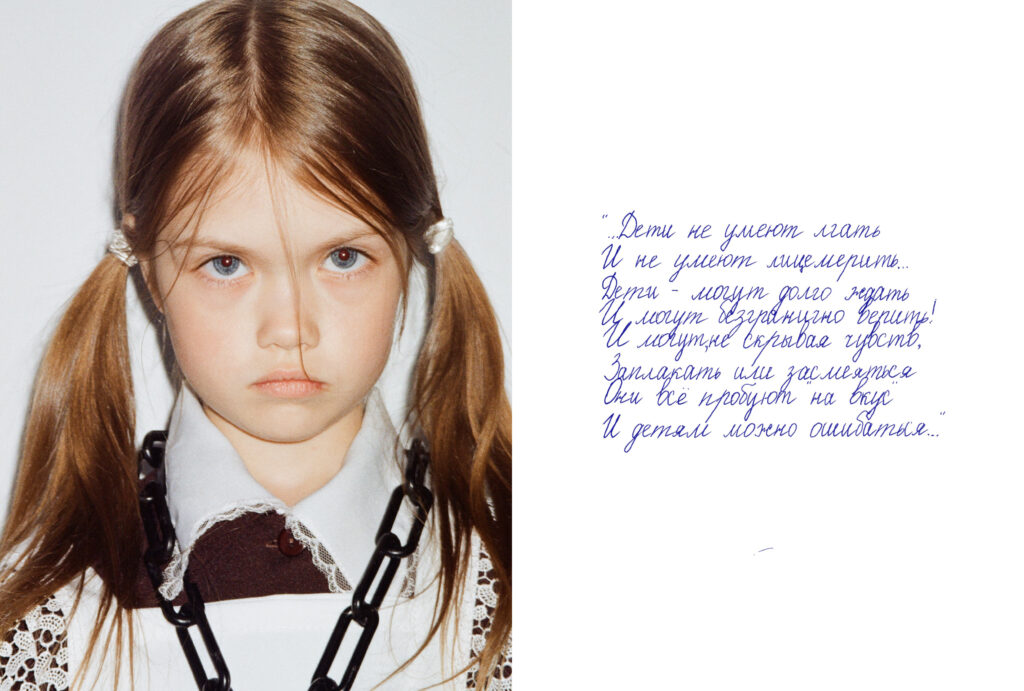
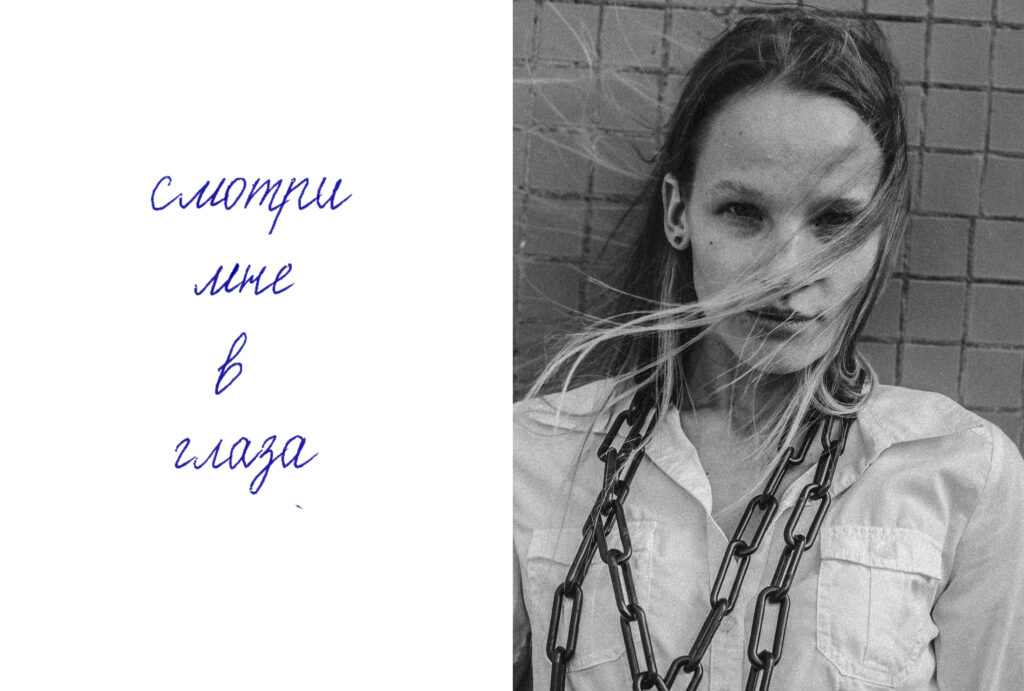
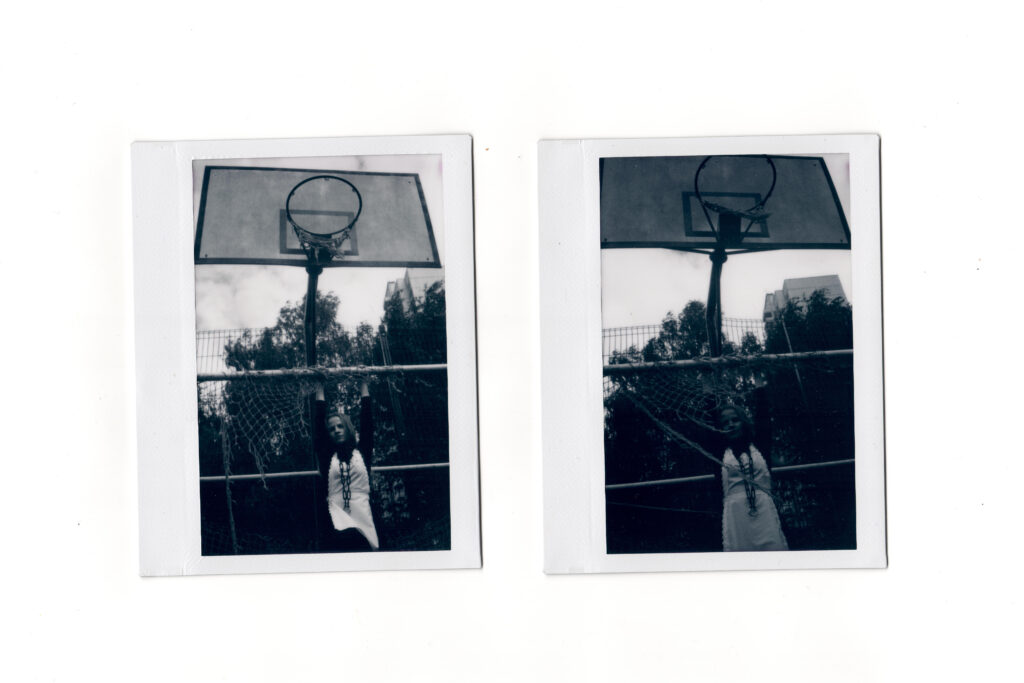
This drive to expose how control works comes directly from Lourier’s past in the fashion industry. She sees everything through a feminist lens, deeply aware of how the female body has traditionally been reduced to an object for visual consumption. Drawing on feminist theory like based but still relevant Laura Mulvey’s critique of the male gaze, Marie explores the tension between simply being looked at and truly being perceived. She positions the female body as a contested space, where external visibility and internal experience constantly rub against each other. In her work, vulnerability turns into a form of radical presence. Photography becomes a tool to expose the unstable, fragile boundaries of the female image.
Marie Lourier
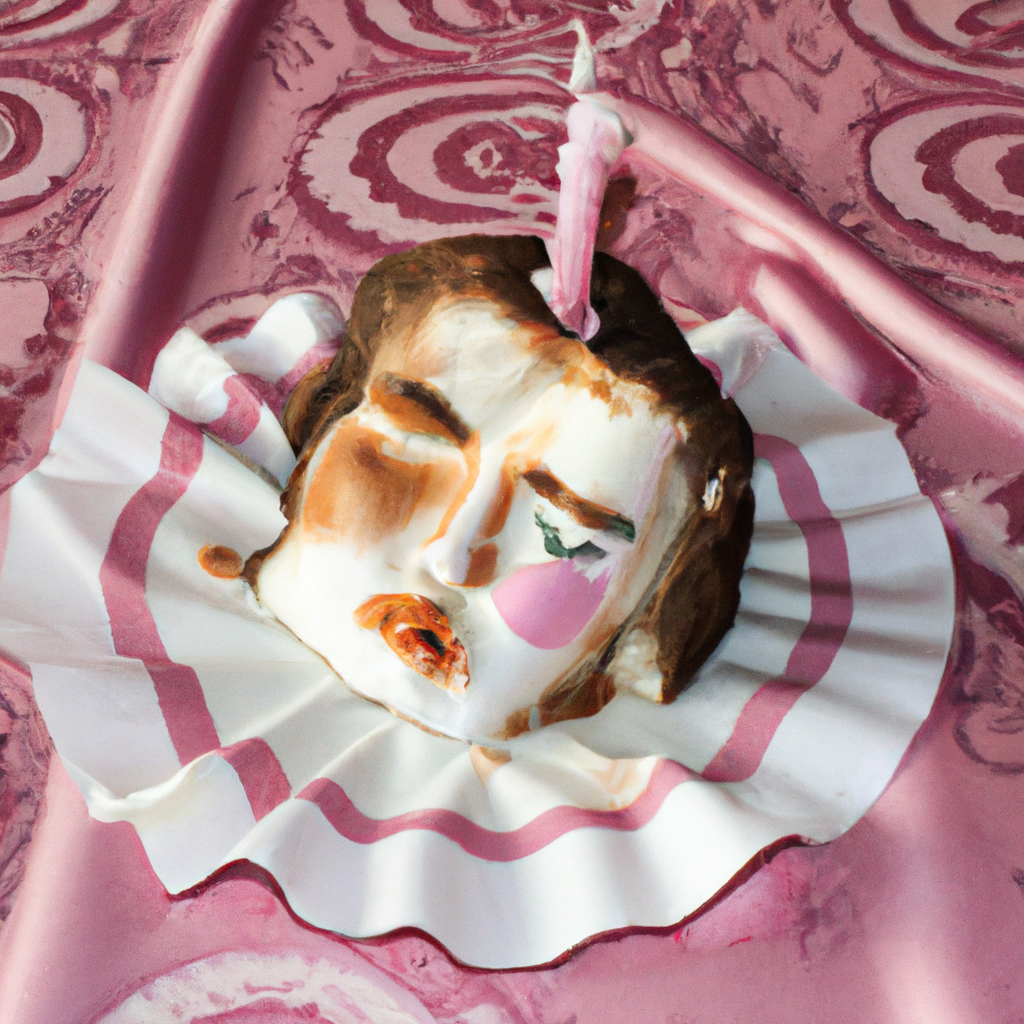
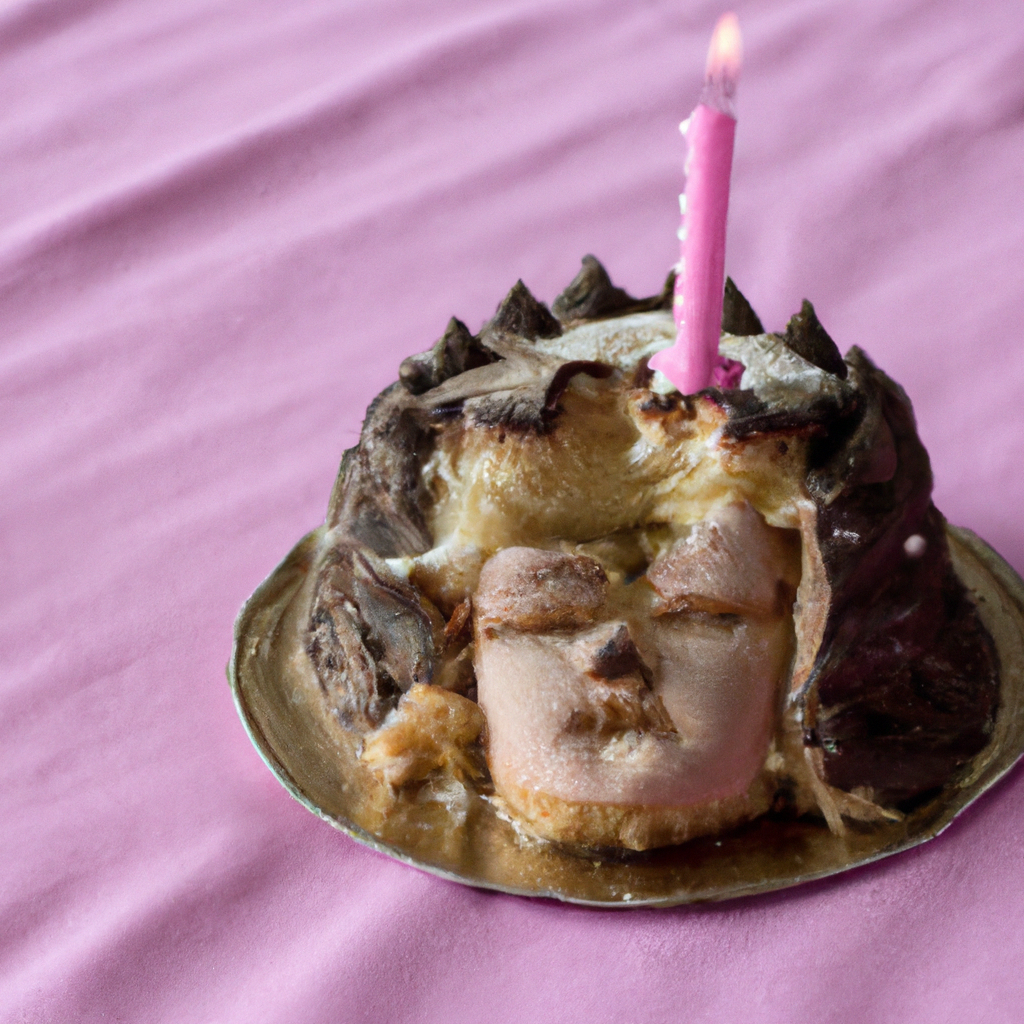
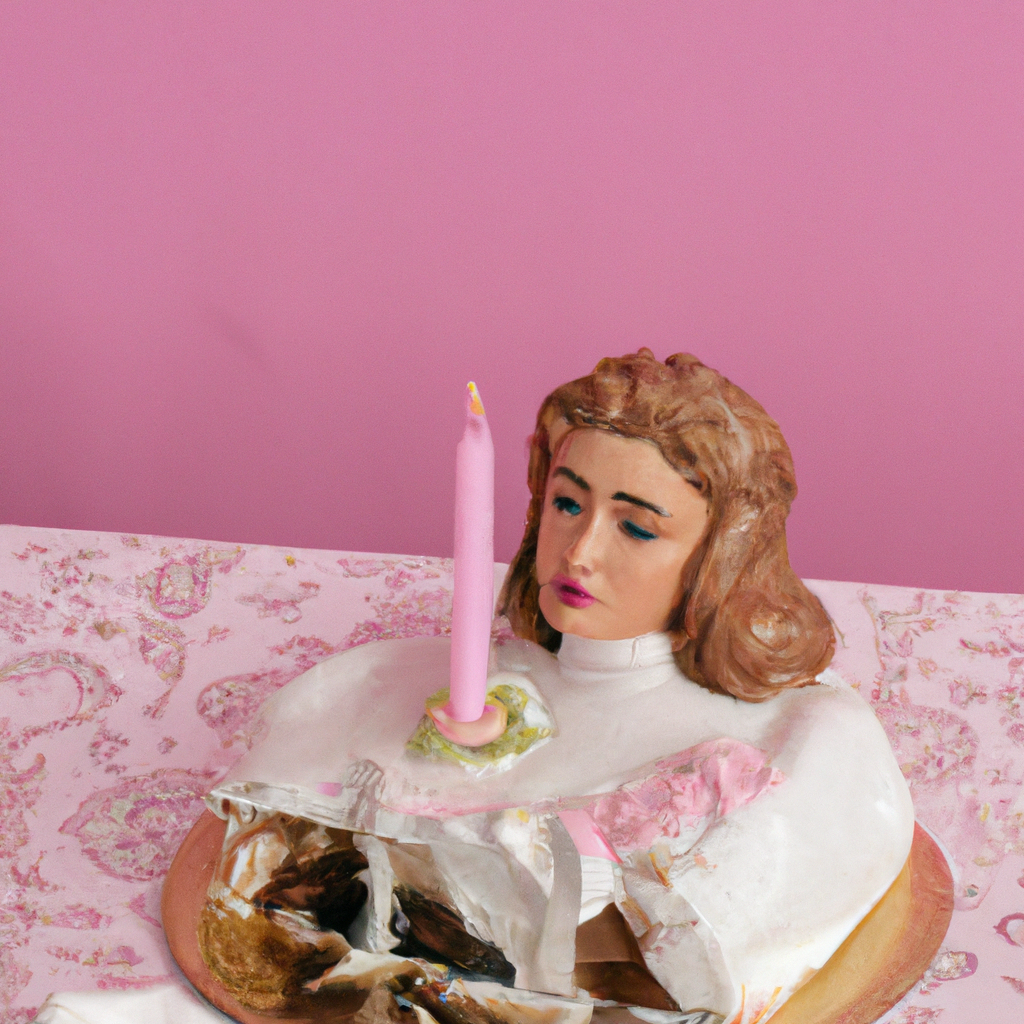
For example, in her later project The F* Word, created for International Women’s Day, Lourier shifts her critique to the gaze of the algorithm. She asked artificial intelligence to generate portraits of women, and discovered that the technology consistently portrayed women as sad, broken, and suffering. She translates this digital failure into a metaphor using a cake, that usually stands for joy and celebration. But in Lourier’s images, the faces of suffering women emerge from the sweetness. The festive object becomes a site of hidden trauma, a reminder that behind every beautiful surface and every polished social ritual there are difficult realities. By pointing to these algorithmic distortions, Marie Lourier forces us to look past the catchy image and confront the messy, painful, and complex truth of contemporary female experience.
text: Anna Azens, art historian