

Jordy Kerwick, a self-taught artist from Australia, has presented his first solo exhibition in Venice at Patricia Low Contemporary. Known for blending ancient iconography, myth, and contemporary influences, Kerwick created Sirens of Venice specifically for the city, drawing inspiration from its canals, legends, and otherworldly atmosphere. Sofiya Kim spoke with him about the inspirations behind the exhibition, his approach to painting and sculpture, the role of music and mythology in his work, and the creative philosophy that drives his practice.
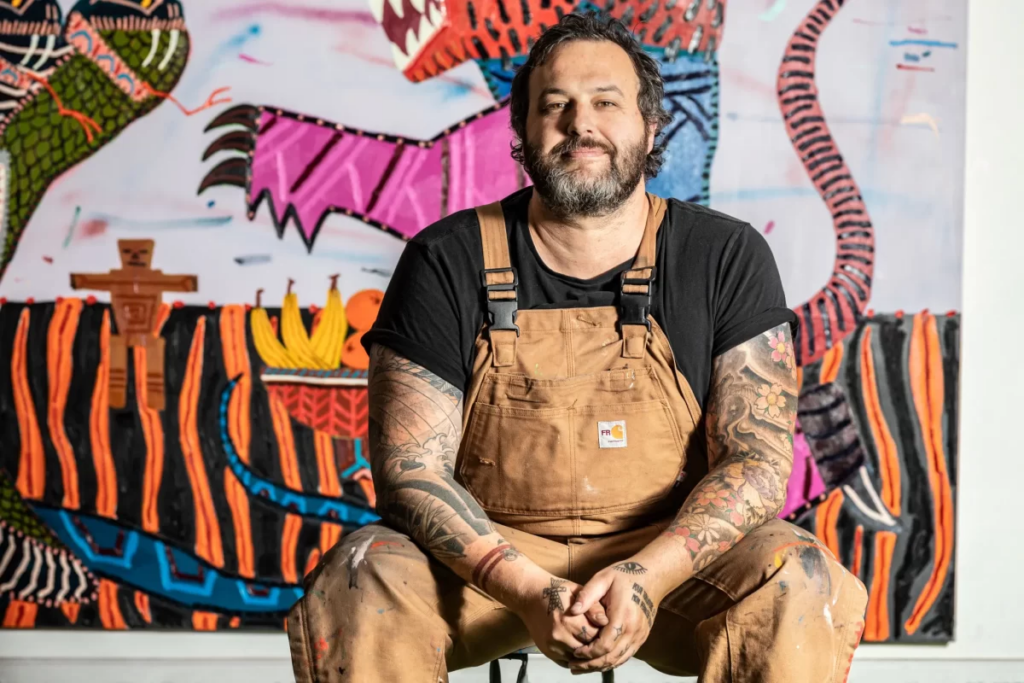
Photo: Modern Forms
Tell us about your newest exhibition and how it fits into your broader artistic practice. What was the most challenging aspect of its preparation?
From an artistic standpoint, Venice gives me the landscape, and I apply the themes that have been present throughout your career, trying to make them relevant to this space. And because Venice is so unique — truly unlike any other place in the world — working here was, in a way, easier. Its difference opens up new possibilities.
As for the challenges: I stuffed up my timeline completely. I had a museum show opening at the end of September and got the dates mixed up, which wasn’t very professional. I ended up having an intensely busy month, working seven days a week in the studio. And to get an exhibition like this right, you need to produce more works than you actually plan to show, because some inevitably don’t work out. If you want ten good pieces, you might need to make thirteen or fourteen knowing that a few won’t be any good.
You often describe yourself as a self-taught artist. Tell us more about your background before your art career. What was your relationship with art like before you started working in this sphere?
I studied finance and ran a few businesses in strength and conditioning, a football college — mostly things related to education. I had them for a while, but eventually they started failing miserably. At that point, my wife bought me some paints because I was so stressed from trying to control everything. I painted patterns on plant pots, then decided to try working on canvas — and the first attempts were really terrible.
At the same time, I was reading a lot about art history: Matisse, Picasso, Paris in the late 19th and early 20th centuries, European art in general, the Baroque and Renaissance. I was interested more in periods than in theory. It was inspiring, and I wanted to get better. So every night after work I painted for four hours — that’s how it all began.
Before that, my relationship with art was mostly through rock-and-roll gig posters — “Queens of the Stone Age” and so on — which I collected before meeting my wife. She encouraged me to explore “real” art more seriously. I started looking at oil paintings, brushstrokes, and different ways to apply paint. So she taught me a bit, and I taught myself a bit.
I’ve always wanted to do something creative, but I don’t think I’m naturally gifted at anything. Whatever I’ve picked up, I’ve had to work very hard. I don’t have a “given” talent — it’s all effort.
Your style mixes ancient iconography with pop culture imagery. Where did this synthesis come from?
I wouldn’t say it’s specifically Egyptian — it’s more broadly ancient. Then there’s the influence of 1980s rock and metal — Sepultura, Pantera. So it becomes this mix: 19th–20th-century French art, ’80s metal, and ancient iconography. Somehow, it all comes together.
About the Venice exhibition
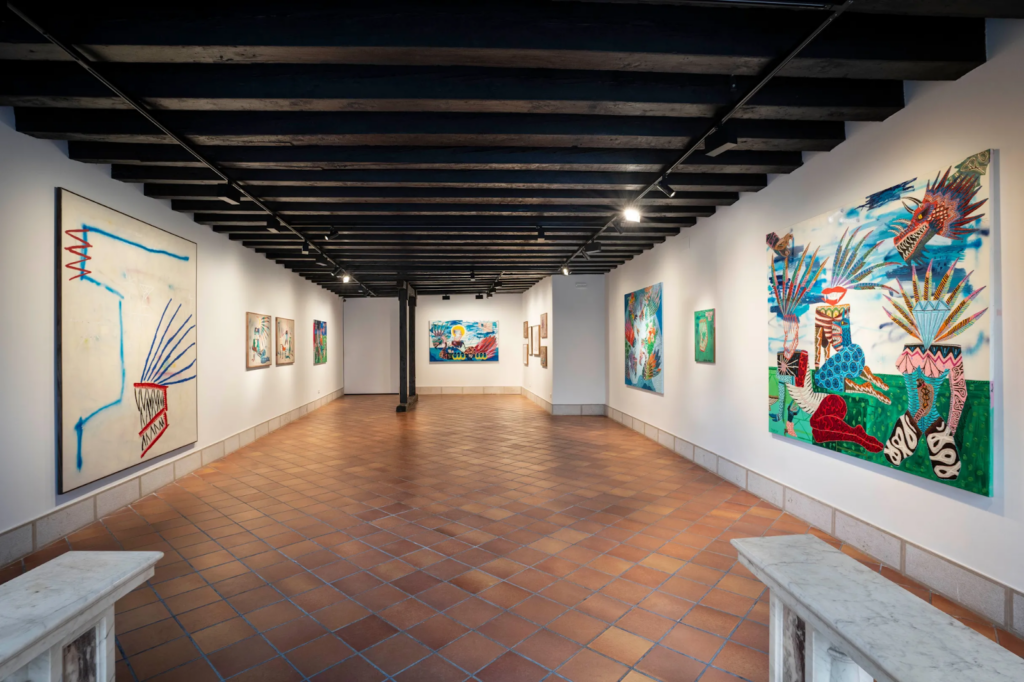
Photo: Patricia Low Contemporary
This is your first time exhibiting here. What is it like to show your work in Venice — a city so closely tied to art?
It’s surreal. The older you get, the more you do things for the experience itself. Having a show in Venice is incredible regardless of the outcome. Creating works specifically for this place, spending time here, meeting the locals — I loved it.
Do you follow the Biennale, and does it influence the way you perceive Venice as an artistic space?
It’s not really my thing. We visited three years ago, and some of it was cool, but a lot of the conceptual stuff doesn’t resonate with me. I look at it with interest, but I’m pretty boring when it comes to art — I prefer traditional museums. That’s more my cup of tea.
What was the starting point for Sirens of Venice — a specific image or a feeling? And why sirens?
It began with the idea of a city surrounded by water – it’s like a unique man-made studio. Going back to mythology, sirens lured sailors only to kill them. There’s something fascinating and alluring about these beautiful subhuman women from the water. Venice feels mystical, almost otherworldly, so the mythology fits perfectly.
The female body is particularly interesting to me — I was looking at Matisse’s reclining nudes, for example. So this project was a chance to continue exploring those curves, combined with the idea of a water-based, mythological figure. The sirens just made sense.
Beyond Venice
Does your style change depending on where you live or exhibit?
Not necessarily. Venice is unique, which made it a good occasion to create something site-specific. But my next show will have nothing to do with its location — just something I want to explore and have fun with.
You also work with bronze and sculpture. What drew you to this medium?
It was the possibility of taking the things I paint and putting them into 3D. I’ve been working at the Yorkshire Sculpture Park for the past year, I wanted to see my painted heads become more realistic forms.
In reality, bronze is complicated. You’re involved at the beginning — developing the concept and making a small maquette — and at the very end, applying the patina. But in between, thirty people in the foundry work on it. I had no idea how complex the process was.
I enjoy it but won’t become my main focus — there’s just not enough time.
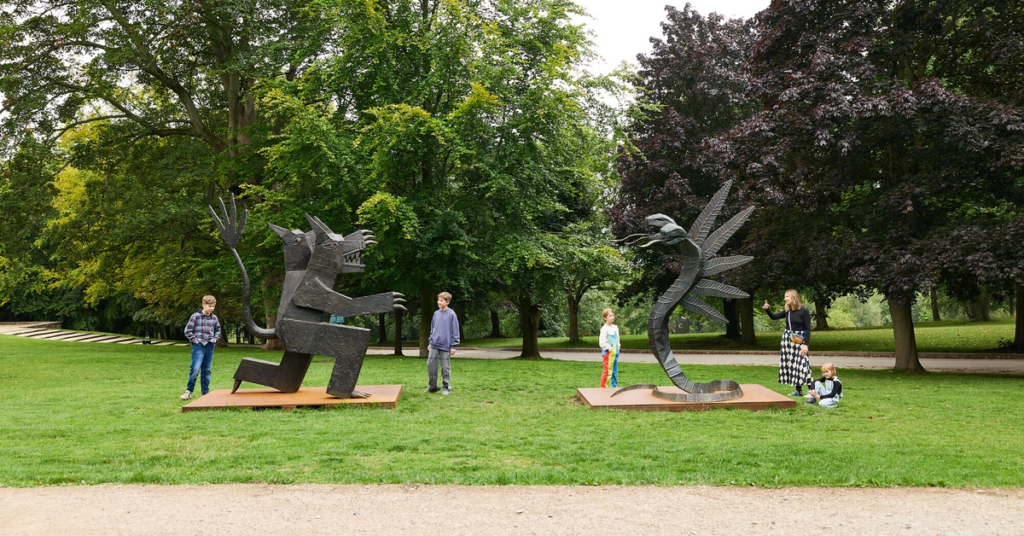
Photo: Yorkshire Sculpture park
Personal questions
Your work gained visibility through the album cover for Machine Gun Kelly’s Tickets to My Downfall. How did this collaboration come about?
His label wanted to do a show at LACMA and invited contemporary artists to create album-cover versions for their big musicians. That’s how I was asked. Eventually, the label printed a number of new vinyl records with my painting on the cover.
Creating this piece was actually challenging because I don’t really listen to his music. I think a couple of songs are cool, but overall it’s not my thing. Still, it was fun, and having a painting at LACMA was great.
You always feel humbled when opportunities like this come along — there are so many amazing artists out there.
After that success, would you like to do more collaborations? Who is on your wishlist?
I’m actually giving an image to one of my favorite Australian musicians for his upcoming album. There are many others I’d love to work with — maybe “Queens of the Stone Age”, “Wu-Tang Clan”, or “The Rolling Stones”. Music is a huge part of what I do.
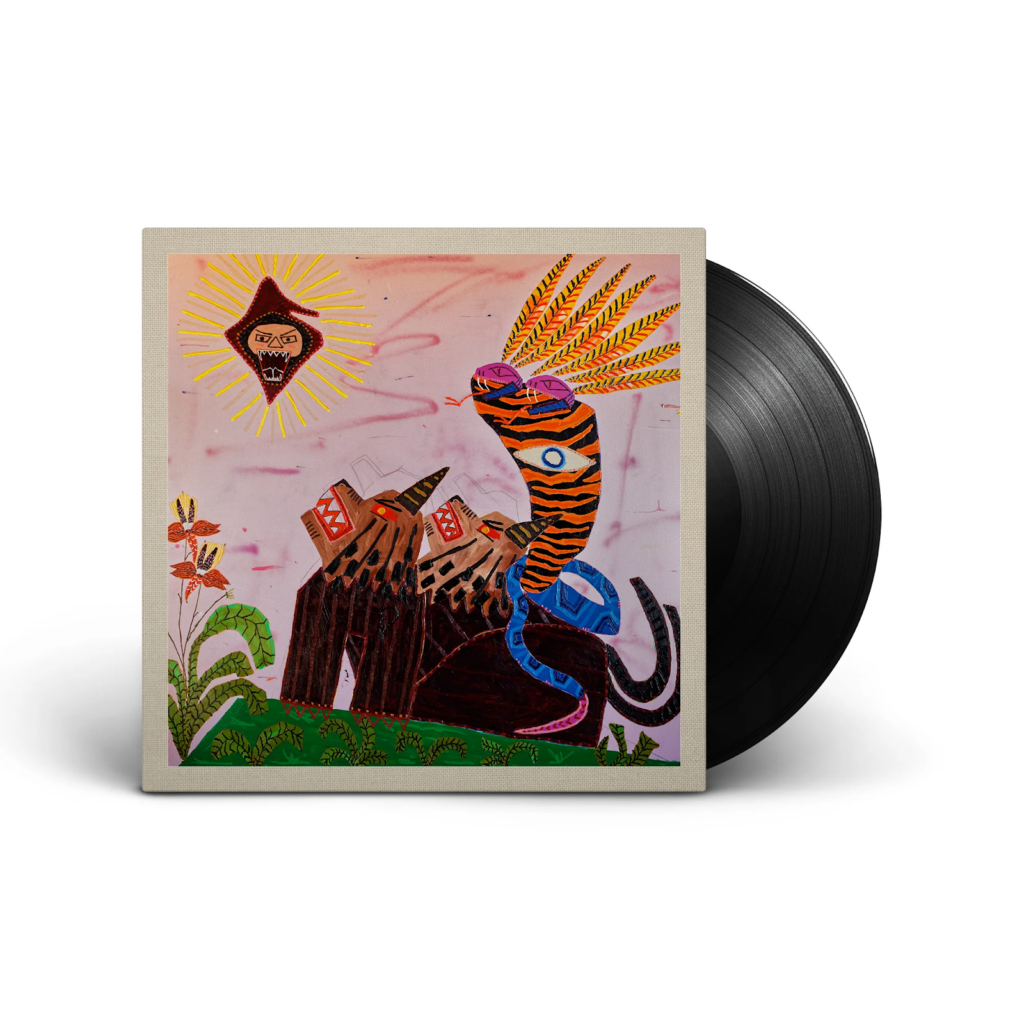
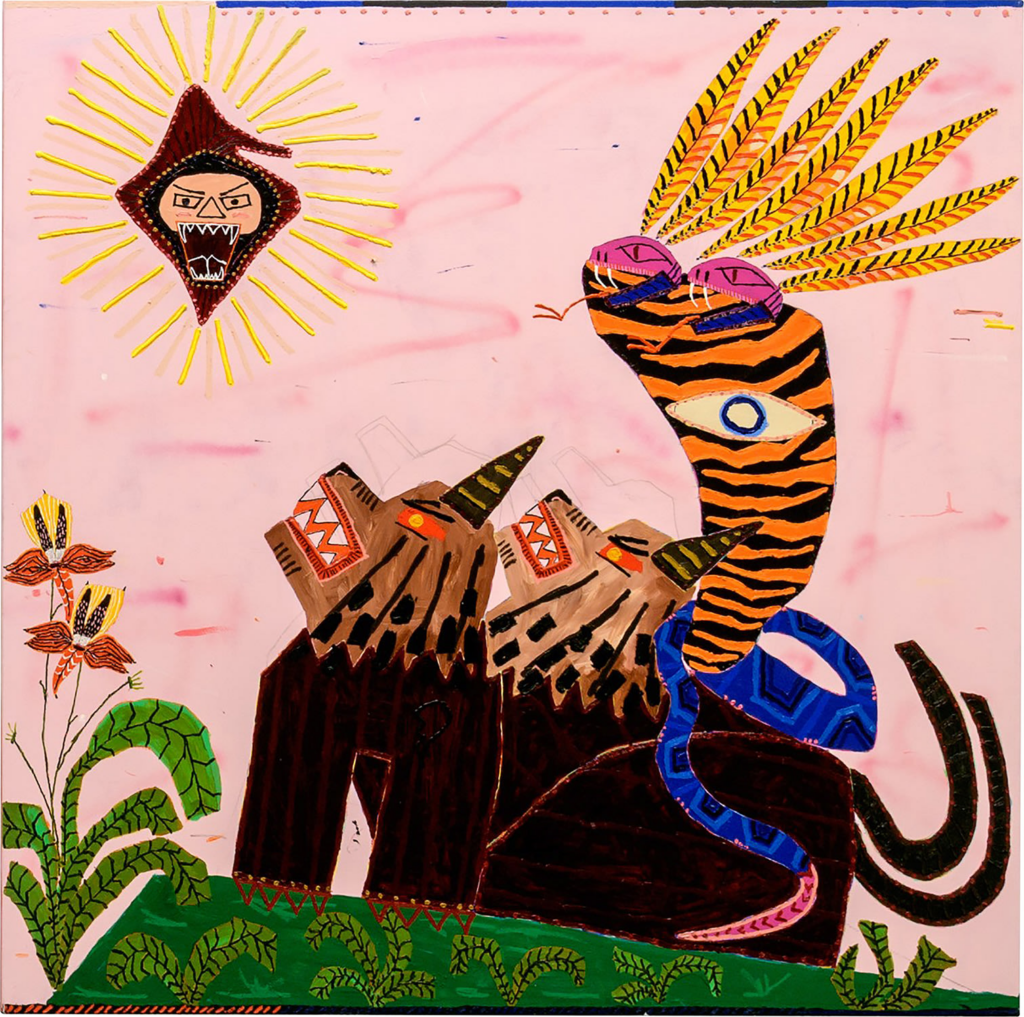
Photo: Interscope records/ Philips Auction
How do you balance creating art for art’s sake with commercial success?
I don’t think about it consciously. After finishing a show, I need to relax, then I start making more work. It’s a weird situation where my hobby and my job are the same thing — there are always two voices, and there’s no conflict between them.
But I do have a mortgage and a family, so I have to sell my work. I just don’t think about it too much while creating. My focus is to make something genuinely cool. If I make good work, it’ll be fine. If the work is bad, I can’t expect it to go well.
How do you assess whether the work is good?
You have to back yourself. I could show you two paintings — I might think one is great and the other is average, and you might feel the opposite. It’s subjective. I might believe something is the best thing I’ve ever made, and you could still think it’s terrible. That’s the reality.
It sounds childish, but if you try your best, it may not be commercially successful, yet at least you feel good about it.
So commercial success doesn’t influence your perception?
No, it does, to a degree. Artists don’t often talk about money because it’s taboo but the reality is that it’s my job. I do have to sell work. Whether or not that commercial need is making ten billion dollars a year or making a thousand bucks a year. That depends on the person.
I have to make sure people like and understand what I do. Also, with branding you got to be present, which is kind of scarred. People need to know that you’re active and working hard and getting better. That gives people confidence to buy.
You’ve described your approach as “the more mistakes, the merrier.” How do you learn to trust accidents, and is there a fear that they might disrupt the original idea?
At this stage, mistakes usually come from the mediums themselves — acrylic, oil, collage. These are the things that make you nervous. So there’s always a question — do I want to spend three weeks painting and then risk ruining it with oil, knowing that it is going to compromise the whole painting if I get it wrong? It’s a struggle, but you learn. It’s constant learning.
The risk is usually worth it, even if you end up having to fix something. It would be boring to keep doing the same thing over and over again. Mistakes push you forward — otherwise, everything would stay the same.