

The 32nd edition of Artissima (31 October–2 November 2025, Oval Torino) continues to affirm itself as Europe’s most conceptually daring art fair. Among its curated sections, Back to the Future – co-curated by Heike Munder and Jacopo Crivelli Visconti – has become a crucial platform for rediscovering pioneering artists from the 1940s to the 1990s.
While the fair operates under the overarching theme Operating Manual for Spaceship Earth, Back to the Future follows its own investigative route: media, communication, machine-human interfaces, and the fragile architectures of expression under social pressure.
We sat down with Heike Munder to discuss her curatorial process, gender balance, political dimension, and the shifting generations she calls the “lost 90s.”
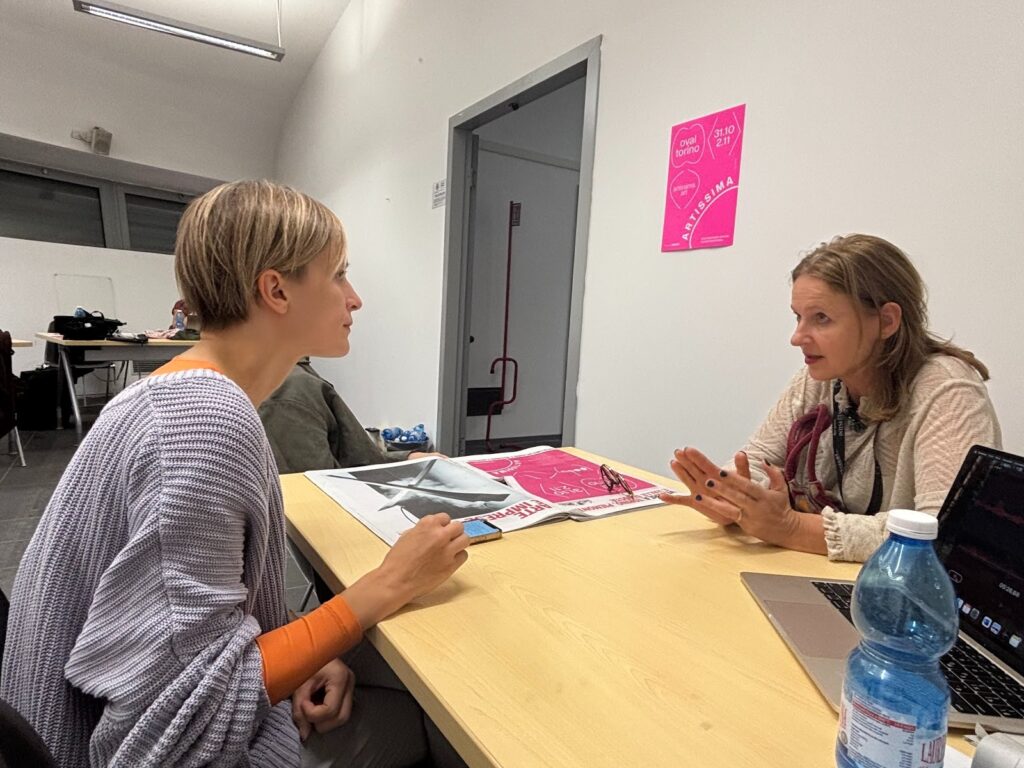
Q: Why exactly three women artists this year? Was the number dictated by the theme or by the proposals?
HM: The truth is that we didn’t set out with a specific number. My first idea was actually to go deep into the 1990s, because this generation has suffered historically—it’s a “lost generation” in terms of visibility and market access. But many galleries were hesitant. When the 90s crashed, the market collapsed, and many artists never recovered. The galleries today still fear that moment.
So we opened the timeframe a bit, looking at practices from the 40s to the 90s, particularly those dealing with communication, language, and media.
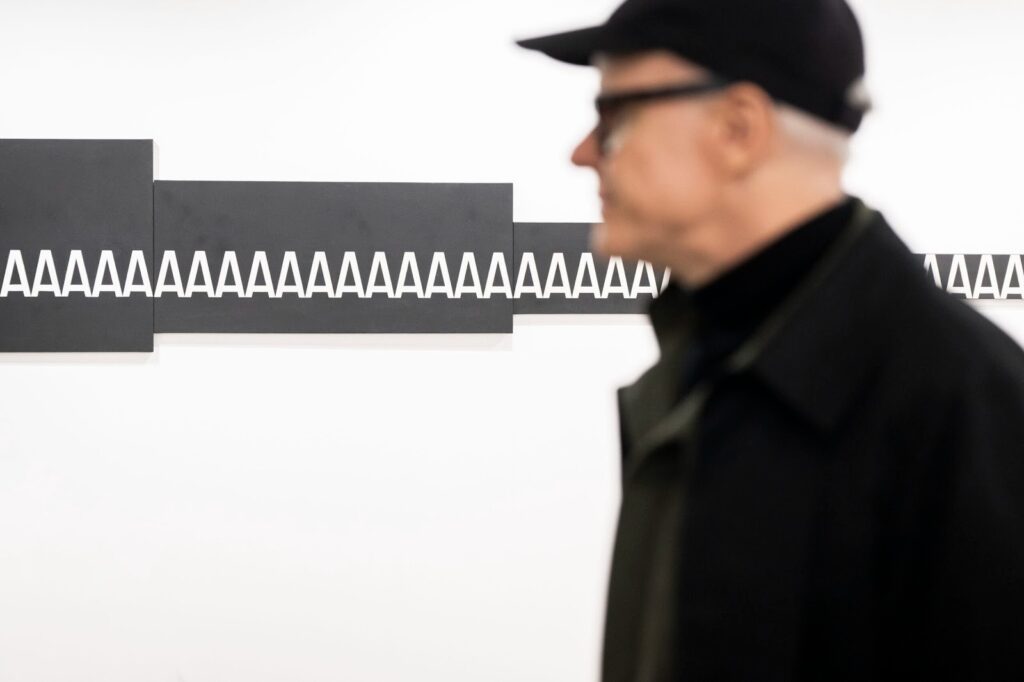
And that’s also why, quite organically, the number of female artists took shape. Last year we had more women than men; this year more men were proposed. But I’m always attentive to gender balance – I simply don’t believe in rigid quotas. Themes can bring different genders into focus depending on who engaged with those media historically.
During our conversation, Munder returned several times to the 1990s as a conceptual starting point – not only because of the “lost generation,” but because of how artists treated communication, media, and the body during that decade.
“It was a big time for Kate Moss and like total different approach to body language and to, you know, like the more androgynous body and all this.”
This shift, she explains, deeply informed how many artists rethought the image, its circulation, its codification, and the fragile new languages emerging through media.
Q: You curated Back to the Future last year as well. How would you compare the two editions?
HM: Last year was broader: from post-war trauma to 70s feminist experimentation, early conceptualism, and ecological thought. This year the focus is stricter: communication, language, interface, and machine-human relation. I pushed again for 90s artists, but it is still difficult – many works aren’t yet in estates, some disappeared, some galleries hesitate.
Another difference is the galleries themselves. Last year smaller galleries were more present, while big galleries were hesitant. This year, the opposite: large galleries were eager to join, perhaps because they see the fair as a “safe platform.”
Q: This year’s edition feels unmistakably political. Was this intentional, or did it emerge organically?
HM: Intentional, but naturally so. My background is in cultural studies, not classical art history. I always look at art through social and communicative lenses.
Freedom of speech, the limits of the public sphere, how art encodes political danger – all of that is deeply connected to communication. And many of the artists we selected lived through dictatorships or repressive systems. Their practices show how communication survives, mutates, hides, or becomes an interface with machines when public language collapses.
Q: The fair’s global theme references Buckminster Fuller (20th-century American visionary architect). Did this influence your curatorial approach?
HM: Not directly. I am more interested in the layers of inner freedom. How do you keep your inner language alive when public speech is constrained? That connects a lot of our artists – from Latin America to Europe.
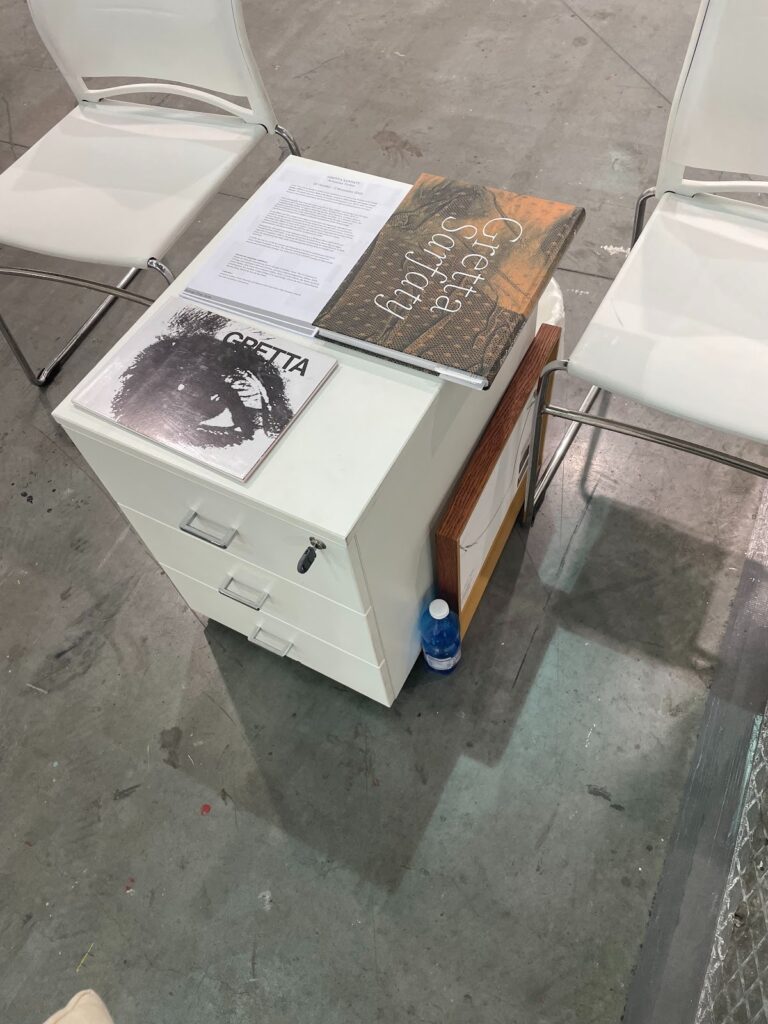
Q: Two artists in the section – Graciela Sacco and Gretta Sarfaty – seem to operate in very different registers. Sacco’s politically engaged, interventionist practice is deeply public, while Sarfaty’s work is more introspective and body-oriented. Beyond their aesthetics, what conceptual or historical thread connects them within your selection?
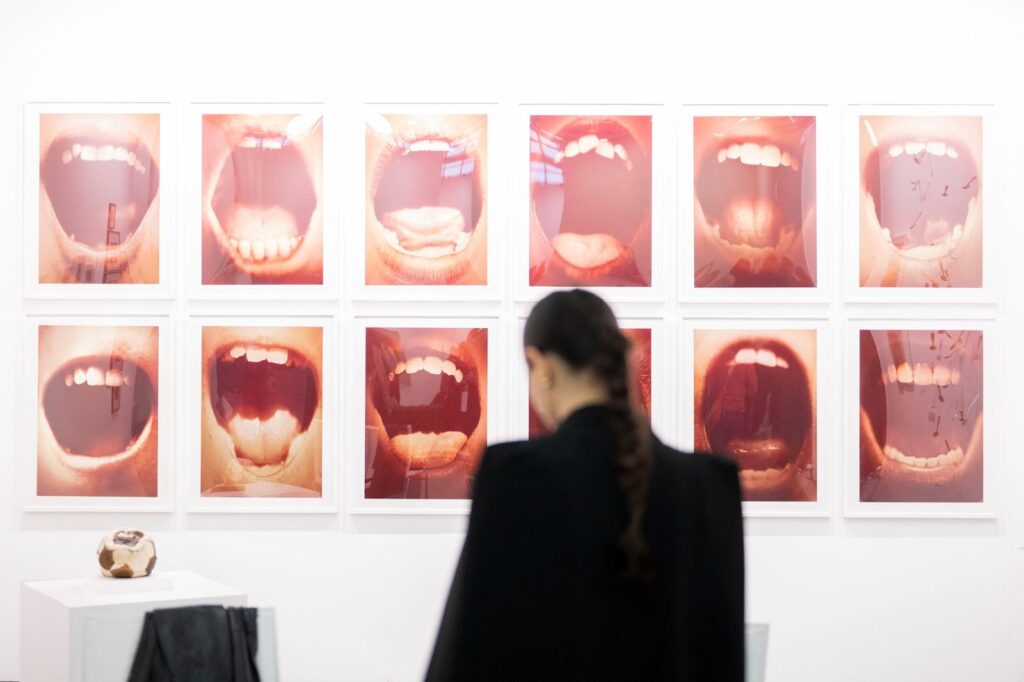
HM: What connects them is the historical condition in which both were working. They lived through dictatorships, though their responses to repression were very different. Sacco acted directly in the public sphere – on the street, in collective spaces – using her work to interact with people and to insert political urgency into everyday environments. Sarfaty, on the other hand, turned inward, exploring the body, identity, and the psychological dimensions of self-representation.
The mediums differ, the scales differ, but the core question is the same:
How do you communicate – outwardly or inwardly – when communication becomes dangerous?
Both artists, in their own languages, negotiate the limits of expression under oppressive conditions. That’s exactly the thread that made them essential for Back to the Future this year.
Q: IRWIN is one of the most striking choices this year. Was it your choice or the gallery’s?
HM: It was mine. The gallery proposed something else, but I asked specifically for IRWIN. I love their humor, their way of deconstructing history, authorship, and “value.” Their “bad taste attitude,” as I call it. They are perfect for the theme of communication,because they question what is transmitted, what is erased, what becomes canonical, and what becomes absurd.
Q: With your long experience – especially at the Migros Museum – what draws you personally to this format of rediscovery?
HM: Art history is not linear. Every generation of artists creates its own ancestors. You can’t always look back to Matisse or Van Gogh – they don’t open new doors for contemporary practices. Forgotten names do.
For me, Back to the Future is a way of respecting artists who open new interpretative paths. Rediscovery isn’t nostalgia – it’s repair.
And it’s one of the most meaningful forms of curating.
Heike Munder’s Back to the Future at Artissima 2025 is not simply a historical section; it is a perceptual map of alternative communication systems – visual, bodily, technological, political. The 90s, with their androgynous aesthetics and shifting languages (“a big time of Kate Moss”), haunt the section as a coded archive of desires and dangers.
When communication becomes fragile, artists invent new idioms.
When speech becomes dangerous, they devise new interfaces.
When history forgets them, curators like Munder bring them back – to the future.