

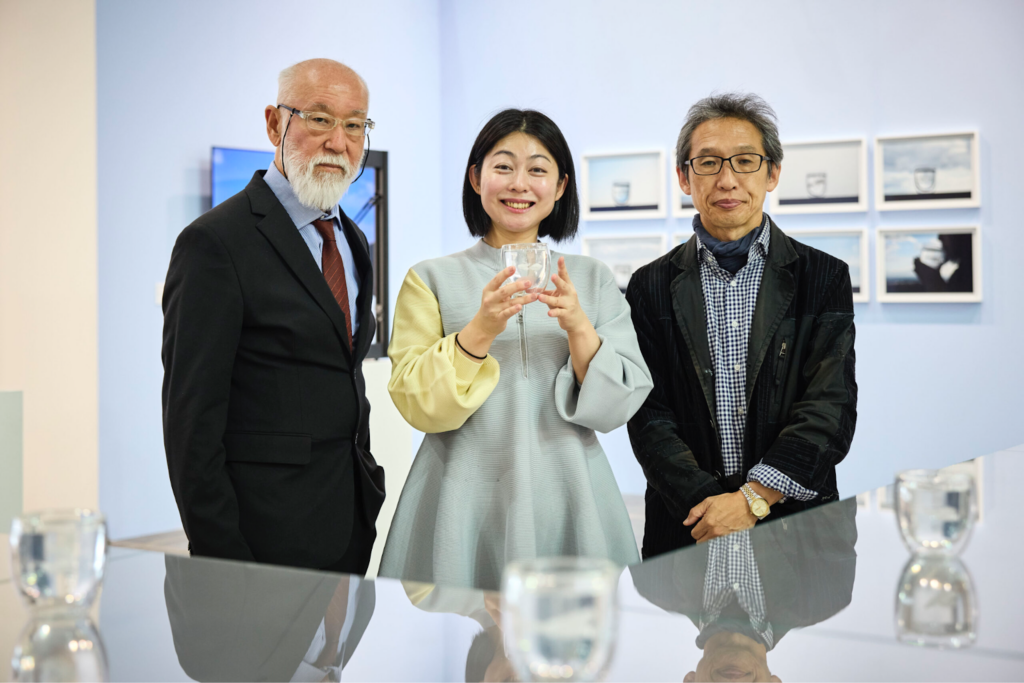
When Artissima introduced the Anonymous Art Project from Japan, curated by the same artistic director behind the 2025 Venice Anonymous Collection pavilion Masahiko Haito, it immediately signalled a shift in how a fair context might host ideas of authorship, memory, and technology. The curator speaks of quietness, of the kinds of artworks that “do not overturn anything, do not shout, they remain.” He often insists that the project is built on “things that continue, even when their forms change.”
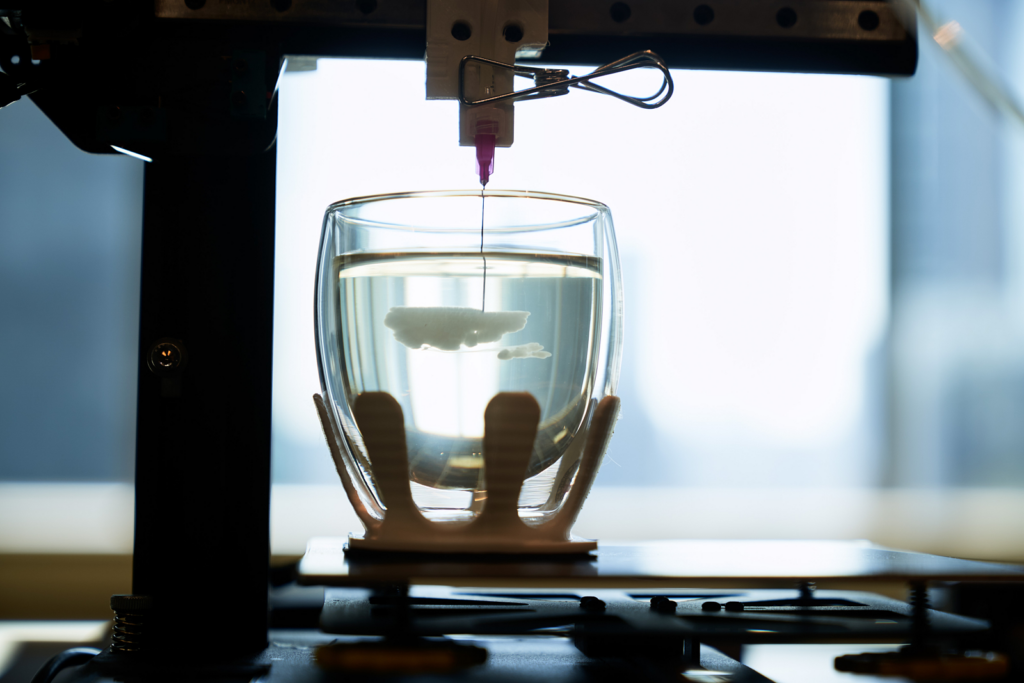
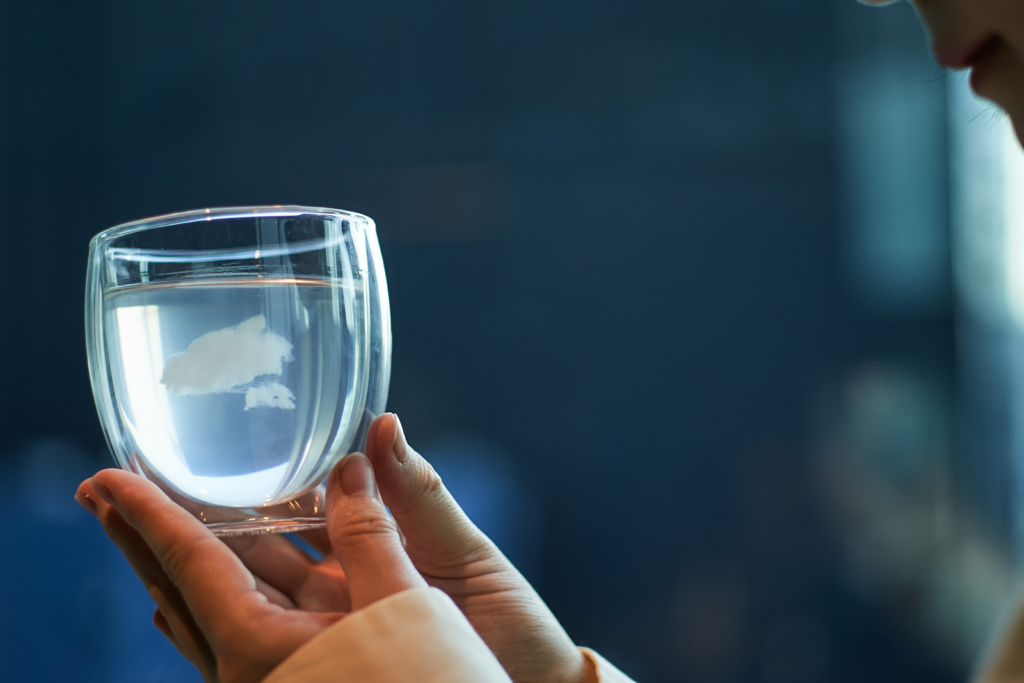
In our conversation, Masahiko describes one of the central artworks: a cup holding a small, artificial cloud that slowly shifts shape. “A cloud is always moving, it never stops, it only changes form. But when you drink the water from this cup, the cloud is absorbed by the body and becomes something that no longer changes.” He pauses before adding: “It stays. It becomes a memory.” Like this technology becomes the hinge through which the unstable becomes stable, the fleeting becomes internalised. Water becomes memory; a cloud takes on the permanence of a body; movement crystallises into stillness. “The form changes,” he explains, “but inside, something remains.”
This understanding of technology has nothing to do with futurism or innovation for its own sake. The curator explains that “technology in Japan has never been separate from the body, from the hand, from life.” What matters is the relationship — “the meeting point between technique and existence”. He reminds me that in Japanese aesthetics, the boundary between tool and gesture is thin. “Japanese people do not divide machines and technology. We do not separate old technique from new technique. It is one continuous practice.”
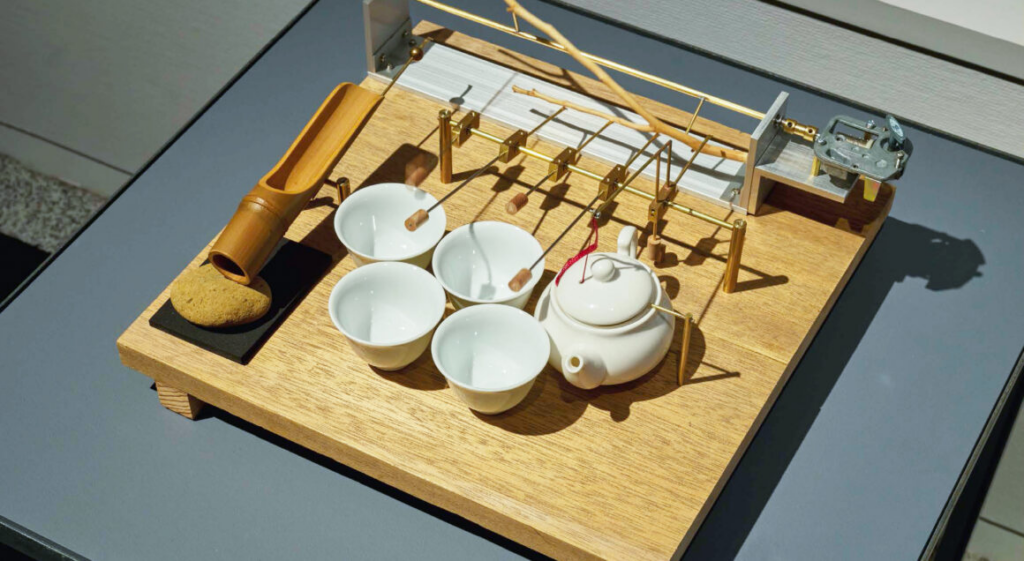
To illustrate this, we return to the tea ceremony. “When someone holds a tea bowl and looks inside, they can see the universe. A microcosmos in one’s hand.” He describes how the same logic shapes the Anonymous Art Project: the artwork becomes a vessel, the viewer completes the cosmos it contains, and technology becomes “a way to create intimacy, not distance.” The tools do not dominate the experience; they “make it more human, more connected.”
He draws a parallel between Buckminster Fuller’s “Spaceship Earth” and Japanese cosmotechnical thought, though he shifts the scale dramatically. “Fuller looked at the whole planet, but I look at the microcosmos — the cosmos in the cup, in the bowl, in the small world the viewer holds.” Masahiko believes that contemporary technology should not attempt to conquer or represent the universe, it needs to reveal it in miniature, in a form the body can absorb. “Cosmos is not far away. It can be inside the hand, inside the body.”
When I ask about the role of anonymity in the project, he answers without hesitation: “Anonymity frees the artwork from the ego. Memory survives longer than identity.” In Venice, anonymity was a method of collective creation; in Turin it became a lens for viewing. Without the gravitational pull of a famous name, “the viewer cannot hide. They must meet the work directly, without protection.” We have a description of anonymity as expansion — a way to allow technology, ritual, and perception to form a single continuous gesture.
Throughout our conversation, he blurs the distinctions the Western art world holds dear: artist and engineer, past and future, ritual and device. “You know, in Japan we do not say: this is traditional and that is modern. The 3D printer is only another tool, like the brush, like the chisel. It continues what came before.” The artworks at Artissima may incorporate advanced processes, but the curator insists that their meaning lies elsewhere. “The technology itself is not important. The memory it creates — that is important.”
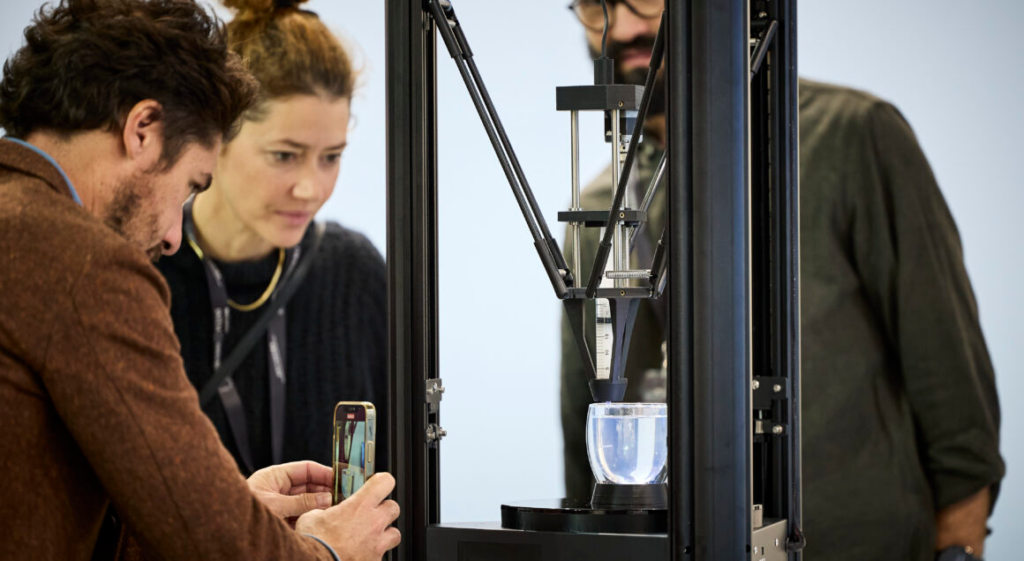
Masahiko returns again to the cloud: “When the viewer drinks it, something changes. The cloud, which never stops moving, becomes part of the body, which always changes, but the memory remains unchanged.” In this moment, technology becomes almost ceremonial — a ritual of perception. “Art and technology are not different. Technology helps us understand nature, and art helps us understand technology.”
When I ask about his approach to cosmotechnics, he points to the tea bowl as if it contains the answer: “In this small world, you can see all worlds. That is cosmotechnics. The cosmos that appears when you look closely, when you pay quiet attention.” For him, this is the true purpose of the Anonymous Art Project: “to create small worlds where the viewer can meet themselves.”
By the end of our conversation, I realise that nothing in the exhibition aims to impress. It aims to remain. Nothing aims to shock; it aims to return, again and again, like memory itself. “Forms change,” he repeats softly, “but inside, something stays.”
And perhaps this is the tender proposition he brings to Artissima: that anonymity can be a form of presence, that technology can be fluid, and that a cloud held in the hand can reveal the entire cosmos.